
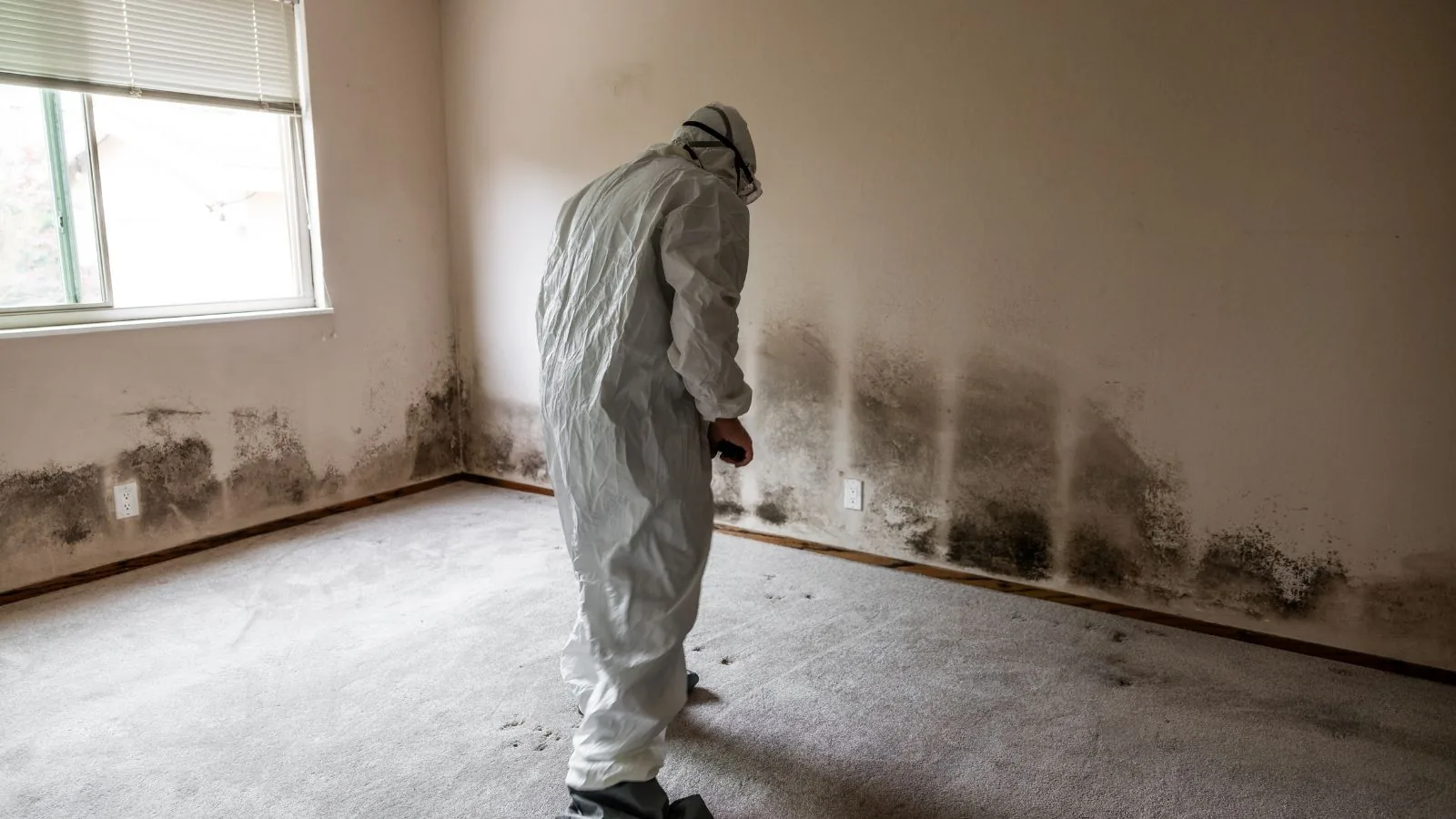
In New York the work is licensed, and the process separates assessment from removal. This guide explains each stage in plain terms.
It is general information and not a plan for any specific building.
The stages of remediation
- Assessment: an independent licensed assessor finds the extent of the growth and the moisture source and writes a plan.
- Containment: plastic barriers and negative air machines keep spores from spreading to the rest of the building.
- Removal: affected porous materials, such as drywall and insulation, are removed and bagged, and surfaces are cleaned with HEPA vacuums and damp wiping.
- Drying and repair of the moisture source so the problem does not return.
- Post-remediation verification: the assessor checks that the work met the plan before rebuilding starts.
How New York handles mold work
Article 32 of the New York Labor Law requires mold assessors and remediators to be licensed by the state Department of Labor. The state's standards bar the same individual from doing both the assessment and the remediation on one property, and an independent assessment defines the scope of work.
The state offers a Licensed Mold Contractors search tool, and you should verify any license before hiring. The industry reference for the work is ANSI/IICRC S520, which describes containment, protective equipment and clearance.
How mold and water damage connect
Mold needs moisture, and water damage supplies it. Drying a wet building quickly is the most dependable way to keep mold from starting, which is what structural drying and dehumidification does. If a house has already had mold, the mold remediation page explains the next steps.
| Job | What it is | Who does it |
|---|---|---|
| Water damage restoration | Removing water and drying the structure | Restoration crew |
| Mold assessment | Finding extent and writing a plan | Licensed assessor |
| Mold remediation | Containment and removal following the plan | Licensed remediator |
| Rebuild | Replacing drywall, paint and flooring | Contractor |
What it costs
Remediation cost depends on the size of the affected area, the materials involved, whether framing is affected, the containment needed and the rebuild. A price quoted before anyone has seen the space is a guess, and the assessment is what makes a real scope possible.
Think you have mold after a leak? Call and describe what you found. The dispatcher will explain what comes first.
What is not remediation
Wiping a small patch of mildew from a shower grout line is cleaning, not remediation. Painting over a stain is cosmetic. Running a dehumidifier is moisture control, which is useful but is not removal. Remediation refers to a defined process with containment, removal of affected materials, cleaning and verification.
The difference matters when you compare offers. A quote for cleaning is not a quote for remediation, and the scopes should look very different on paper.
What to expect during the work
- Plastic sheeting and zippered doors isolate the work area.
- Negative air machines with HEPA filters pull air out of the containment and exhaust it outside or through filters.
- Workers wear protective gear and enter and leave through a decontamination area.
- Affected materials are bagged inside the containment before being carried out.
- The area is cleaned and dried, and the assessor inspects before it is opened up.
Expect the house to be noisy during the work, and expect restrictions on using the affected rooms. Ask the remediator how long the job is expected to take and what you must do to prepare, such as clearing the area.
Documentation you should receive
At the end of the job you should have a written scope, a record of the materials removed, photographs and any moisture readings taken at the finish. If an independent assessor was involved, the clearance report belongs with those papers.
Keep everything together with your plumbing repair invoice. Together they show what went wrong, what was done and how it was checked, which helps with an insurer, a lender or a future buyer.
If a document is missing, ask for it before you make the final payment. It is much easier to request records while the crew is still on the job.
Syosset note: where to verify what applies
Mold work in Syosset follows New York State rules, and the Town of Oyster Bay building department handles permits for any rebuild. If your property is in Cold Spring Harbor, it is in Suffolk County and the Town of Huntington, which have their own offices, as the Cold Spring Harbor page notes.
Ask any company whether it holds the state license for the part of the work it is offering, and check it with the Department of Labor. We do not list license numbers on this site.
Questions homeowners ask
Is mold remediation the same as mold removal?
Remediation is the full process, including containment, removal and verification. Removal is one step in it.
Do I need an assessor before remediation?
In New York, an independent assessment defines the scope for licensed work, and the same individual cannot do both. Check the state's rules and ask the assessor.
Will remediation stop mold from coming back?
No one can promise that. Fixing the moisture source and drying the building are what reduce the chance.
Can a restoration company do remediation?
Only if it holds the required state license for that work. Ask to see it.
Have water damage right now? The line is open 24/7.
Call (833) 521-1033