
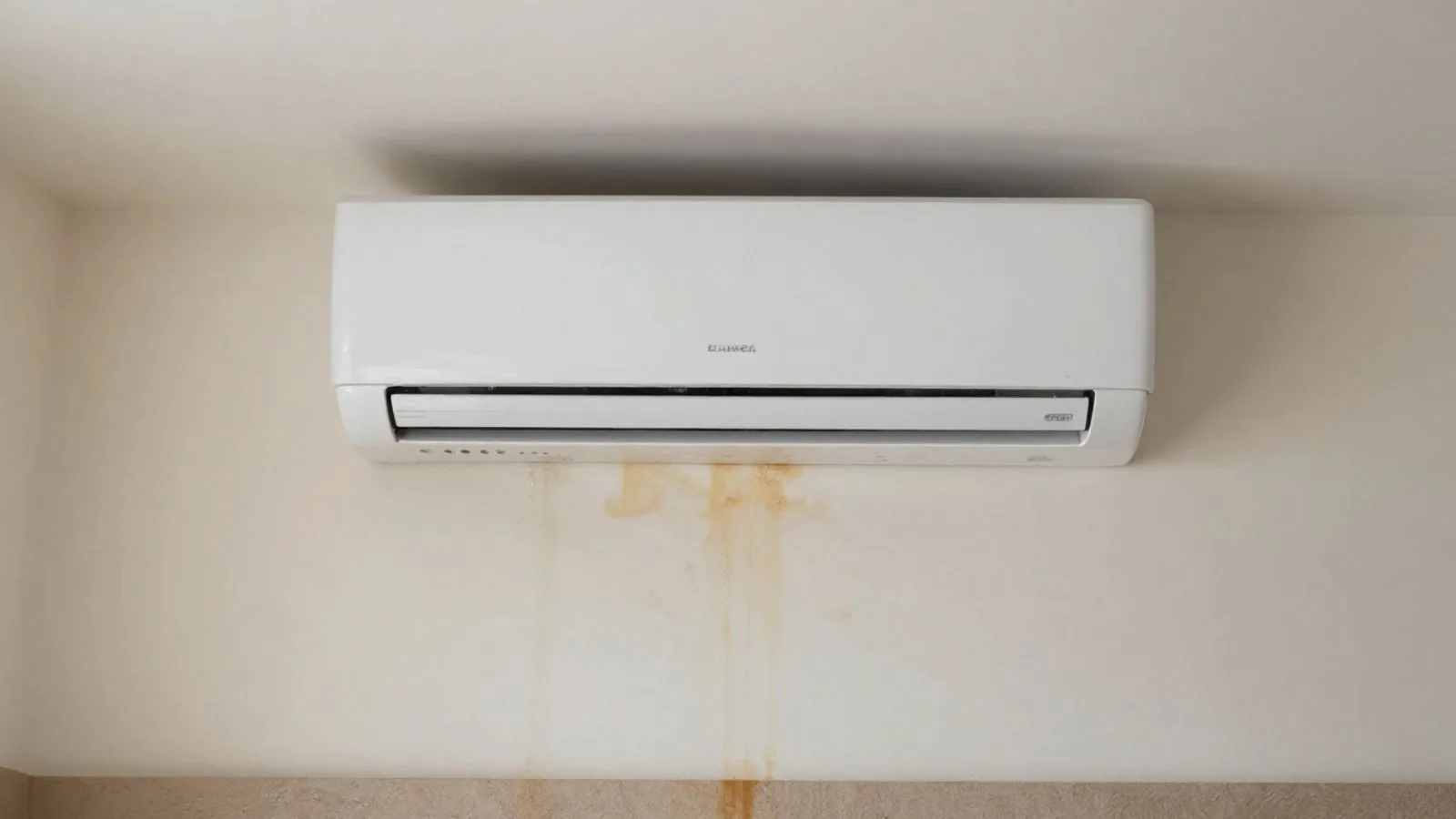
An air conditioner that leaks water through a ceiling or onto a floor in Syosset is usually dealing with a blocked condensate drain, a cracked pan or a failed float switch. The leak may be slow, so the first sign is often a stain, not a puddle. Turn the system off at the thermostat, catch the drip and call to have the water located and dried.
AC leak water damage repair, in our scope, is the cleanup of the water and the wet materials that the unit leaked onto. An HVAC technician fixes the equipment, and we handle what got wet.
How AC systems leak
Cooling removes humidity from the air, and that water leaves through a condensate drain. When the drain clogs with algae or debris, the pan overflows. Systems in attics and closets drip through the ceiling or onto the floor below. A cracked pan, a loose drain connection or a frozen coil that thaws can add to the flow.
Because the water is usually slow and clean, damage builds quietly. A ceiling stain that returns every summer is a typical sign.
Where the water ends up
- A stain or sag on the ceiling beneath an attic or upper floor unit.
- A wet wall behind a closet air handler.
- A damp floor and baseboard near a basement or utility closet unit.
- Wet insulation around the unit that holds the moisture for weeks.
Condensate water carries some biological residue from the drain pan, so it is not always perfectly clean. It is usually treated as Category 1 when fresh and Category 2 if it has been sitting or has soaked into insulation.
What the cleanup includes
The crew confirms where the water went with moisture meters, since a ceiling stain can sit well away from the unit. Wet insulation is removed, damaged board is cut out and the cavity is dried with air movers and dehumidifiers. Because the air conditioner may still be needed in hot weather, the plan keeps it off until the HVAC technician has fixed the drain, to avoid wetting the area again.
Mold is the main worry on slow condensate leaks. Moisture that has persisted for weeks can support growth on insulation and drywall, and the page on mold remediation explains what New York requires when visible growth is found.
| Symptom | Likely cause | Next step |
|---|---|---|
| Stain below an attic unit that returns each summer | Clogged condensate line or pan | Have the drain cleared, dry the ceiling cavity |
| Puddle by a closet air handler | Overflowing pan or loose drain fitting | Turn the unit off, dry the area, repair the drain |
| Drip when the coil ices over | Frozen coil melting | Let it thaw with the system off, check airflow and refrigerant |
| Musty smell near vents or a stained ceiling | Long-term moisture | Moisture mapping and a check for growth |
Ceiling stain or wet floor from your air conditioner? Call and describe where the unit sits.
Cost factors and claim notes
- DurationA leak that has dripped for a season wets more than one found in a day.
- Unit locationAttic units wet insulation and ceilings, closet units wet walls and floors.
- InsulationWet insulation usually has to be replaced rather than dried.
- Mold signsVisible growth adds a different process and different rules.
Policies often treat sudden overflow differently from gradual leakage and from equipment wear. Photos of recurring stains, moisture readings and the repair scope help explain the loss to your insurer. Ask your insurer how your policy treats it.
If the water mostly stained a ceiling, ceiling water damage repair covers that part in more detail.
What to do before the crew arrives
Whatever the cause, a few safe steps taken while you wait help the crew and your insurer. These apply to ac leak water damage repair as much as to any other water loss.
- Stop the source if you can reach it safely, usually by closing the main water valve.
- Stay out of standing water near outlets, appliances or the electrical panel, and call 911 or the utility if you see sparks or smell gas.
- Keep children and pets out of water that may be dirty, and do not run household vacuums or fans through it.
- Take photos and video of the damage and the source before anything is moved.
- Do not throw out wet materials until your insurer or the crew has seen them.
Professional drying and cleanup of this kind follow the ANSI/IICRC S500 standard for water damage restoration, which is why the crew records moisture readings and sets drying goals instead of guessing. If mold is found, work follows the S520 standard and New York's licensing rules.
Questions people ask about this service
Is an AC leak an emergency in Syosset?
Often it is not a flood, but it should not wait. A dripping ceiling can bulge and release more water, and an active leak next to light fixtures is a safety concern. Turn the system off and call.
Can AC condensate leaks cause mold?
Yes, if damp insulation or drywall stays wet for days or longer. Drying the area promptly is the way to avoid it.
Do you repair the air conditioner?
No. We handle water removal, drying and documentation. An HVAC technician repairs the drain, pan or coil.
Why does the stain come back every summer?
A recurring stain usually means the drain clogs or the pan fails each cooling season, or that the ceiling was never fully dried. Both are fixable once the cause is found.
Should I keep running the AC if it is dripping?
No. Running it keeps producing condensate that has nowhere to go. Turn it off until the drain is cleared or repaired.
Water still moving? The line is open 24/7.
Call (833) 521-1033