
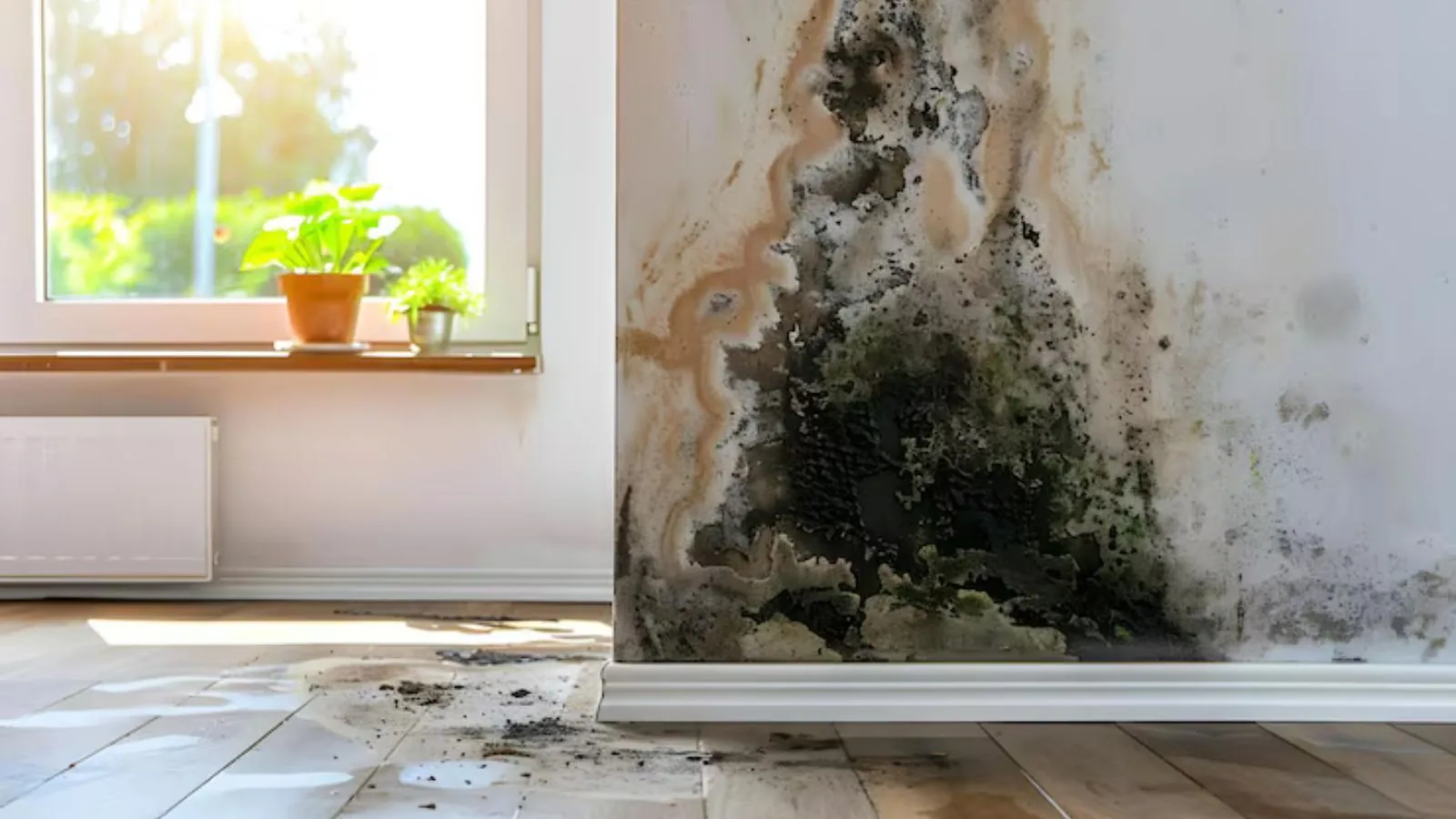
Mold in a Syosset home usually follows water: a leak that was never fully dried, a damp basement or a wet wall. New York licenses mold work, so who does what matters as much as how it is done.
Mold remediation removes mold growth and the materials it has damaged, and fixes the moisture that fed it. Under New York's mold law, an independent assessment defines the scope of the work, and the same individual cannot both assess and remediate mold on the same property.
Musty smell, dark spots, a ceiling stain that keeps returning
Most people notice mold by smell or by a stain, not by a lab result. A musty odor in a basement, black or green spots on a wall and a stain that comes back after being painted over are the common signs. Questions about health effects belong with a physician, not a restoration company.
Not every dark spot is mold, and not every mold is dangerous. A professional assessment identifies the extent and the moisture source, which tells you what is needed.
How New York regulates mold work
Under Article 32 of the New York Labor Law, mold assessors and remediators must be licensed by the New York State Department of Labor, and it is unlawful to advertise or hold yourself out as one without a license. The state's standards also bar the same individual from performing both the assessment and the remediation on one property.
Ask anyone you hire for mold work to show their state license. The Department of Labor offers a Licensed Mold Contractors search tool where you can check it. We handle the water damage side and explain what a mold job requires, and you should verify any mold license directly with the state.
How remediation is done
- An assessor tests, finds the extent and writes a remediation plan, including the moisture source.
- The remediator sets up containment with plastic barriers and negative air machines so spores do not spread.
- HEPA air filtration runs, and moldy materials such as drywall and insulation are removed and bagged.
- Surfaces are cleaned with HEPA vacuums and damp wiping, and structural wood may be cleaned or sanded.
- Drying removes moisture, and the assessor performs post-remediation verification before rebuilding.
The ANSI/IICRC S520 standard is the industry reference for professional mold remediation. It describes containment, protective equipment and clearance. It is a standard, not a promise that a given company follows it, so ask how a company applies it.
| Step | Purpose | Who does it |
|---|---|---|
| Fix the water source | Stops new moisture | Plumber or contractor |
| Dry the structure | Removes the moisture mold needs, see structural drying | Restoration crew |
| Assess mold | Find extent and write a plan | Licensed assessor |
| Remove mold | Contain and remove growth | Licensed remediator |
Testing, inspection and clearance for a home sale or loan
Mold comes up in home sales more than almost anywhere else. When a lender or a buyer's inspector flags it, the usual path is an independent assessment, removal by a licensed remediator if work is needed and a post-remediation check by the assessor. Whether a lender accepts the result is the lender's decision, and nothing here promises it.
An inspection is a visit to look, take moisture readings and talk through the options. It is also how the scope and the price get explained before any work starts. If you only want someone to look at it first, say so when you call.
Smell a musty odor or see growth after a leak? Call and describe where, and the dispatcher will explain what comes first.
Cost factors, and why no price is given here
Mold jobs vary too much for an honest price without an assessment. The size of the area, the materials affected, whether framing is involved, the need for containment and the cost of rebuild all change it. A price quoted before anyone has seen the problem is a guess.
- Area affectedSquare footage drives containment and removal.
- MaterialsDrywall and insulation are removed, framing is cleaned.
- ContainmentNegative air and barriers add setup.
- Moisture sourceFixing the source is part of the job.
Insurance coverage for mold is often limited, and many policies cover it only when it follows a covered water loss, sometimes with a cap. Check your policy and ask your insurer. Other pages explain how the water side starts, such as water extraction and crawl space water damage.
What to do before the crew arrives
Whatever the cause, a few safe steps taken while you wait help the crew and your insurer. These apply to mold remediation as much as to any other water loss.
- Stop the source if you can reach it safely, usually by closing the main water valve.
- Stay out of standing water near outlets, appliances or the electrical panel, and call 911 or the utility if you see sparks or smell gas.
- Keep children and pets out of water that may be dirty, and do not run household vacuums or fans through it.
- Take photos and video of the damage and the source before anything is moved.
- Do not throw out wet materials until your insurer or the crew has seen them.
Professional drying and cleanup of this kind follow the ANSI/IICRC S500 standard for water damage restoration, which is why the crew records moisture readings and sets drying goals instead of guessing. If mold is found, work follows the S520 standard and New York's licensing rules.
Questions people ask about this service
What should I do if I find mold after a leak?
Fix the water source if you can, avoid disturbing the mold and keep the area closed. Call so someone can explain whether the job needs a licensed assessor and what drying is required.
Can I clean small mold spots myself?
Small, surface-level spots on non-porous material can sometimes be cleaned by a homeowner, with protective gear and ventilation. Large areas, porous materials or recurring mold need professional help, and New York's licensing rules apply to that work.
Does bleach kill mold?
Bleach can discolor surface mold but does not reach growth inside porous materials like drywall. Removal, not bleaching, is the usual approach for porous surfaces.
Why can't the same person assess and remove the mold?
New York's standards require an independent assessment to define the scope of work and bar one individual from doing both on the same property. That keeps the person who decides what is needed separate from the person paid to do it.
Will a lender accept my mold clearance report?
That is up to the lender. Many want an independent post-remediation verification from a licensed assessor, so ask the lender what it requires before work begins.
How much notice do you need for an inspection?
There is no fixed notice period to quote. Call, describe what you are seeing and the dispatcher will explain the next step. No arrival time is promised on this site.
How do I know the mold is gone?
Post-remediation verification by the assessor, including visual inspection and sometimes air or surface sampling, confirms that the work met the plan.
Water still moving? The line is open 24/7.
Call (833) 521-1033