
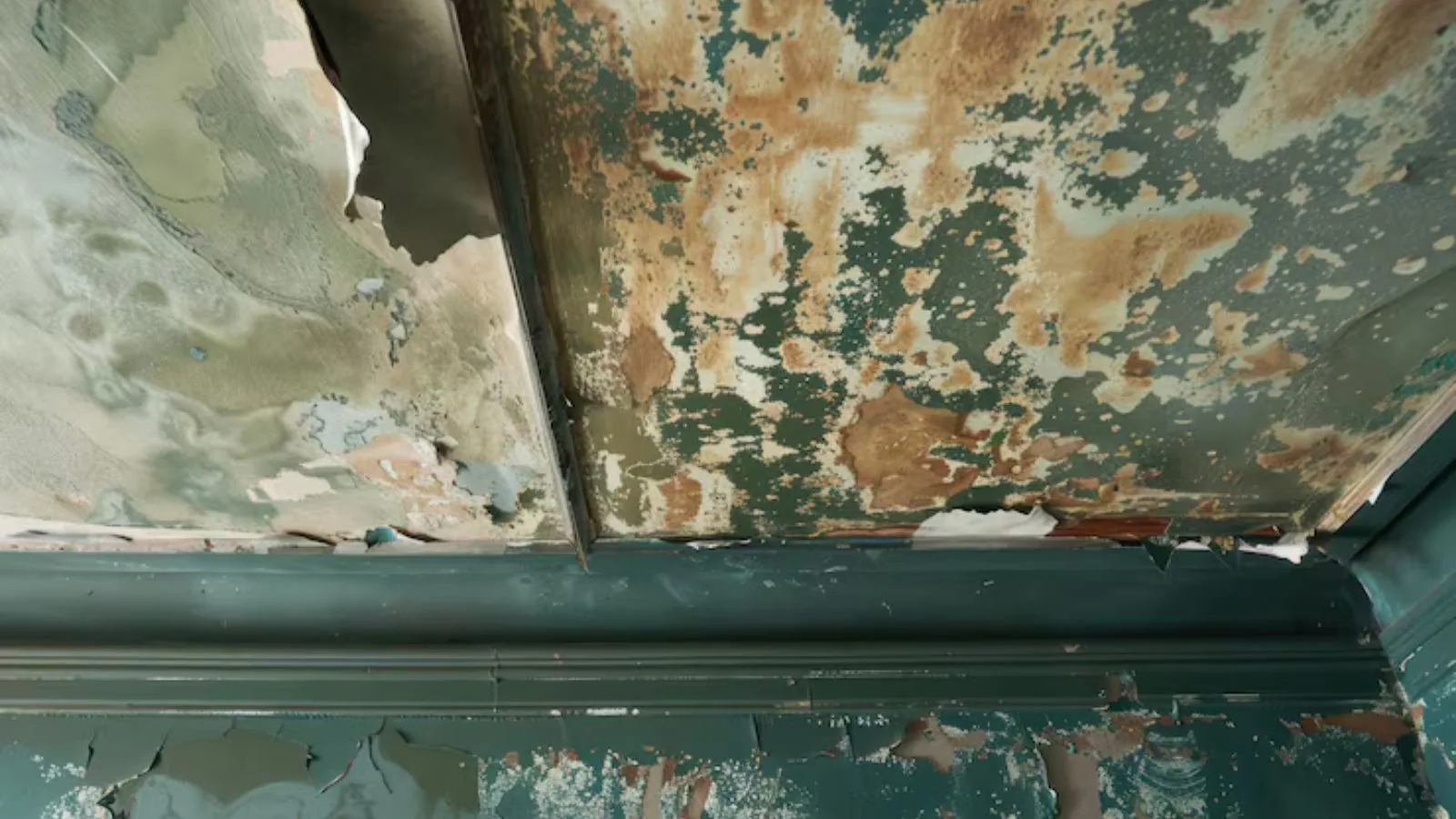
Drywall soaks up water like a wick, and the damage climbs the wall long after the leak stops. In Syosset homes, a wet wall is rarely just the part you can see.
Wall and drywall water damage repair means finding how far moisture traveled, removing board and insulation that cannot dry, drying the framing and preparing the wall for rebuild. It is the step between the leak and a clean, repaintable wall.
How water climbs a wall
Gypsum board absorbs water and draws it upward through capillary action, a process called wicking. Water on a floor can rise several inches into the wall base within hours. Paper-faced drywall is especially vulnerable, and the paper is food for mold once it stays damp.
Behind the drywall are studs, insulation and sometimes wiring. Wet insulation holds water against the framing, which is why walls often need to be opened for proper drying.
Signs a wall is wet inside
- Paint that bubbles, peels or stains in rings.
- Baseboard that lifts or separates from the wall.
- Drywall that feels soft, crumbles or sags.
- A musty smell near the wall base.
- Warm or cold spots on a thermal camera scan.
The flood cut and other removal
Technicians cut out wet board above the visible water line. A cut commonly runs about two feet above the water level for flood water, though the exact height depends on how far moisture wicked. For clean water from a leak, a smaller cut may be enough, and sometimes small areas can be dried in place.
Wet insulation is removed, because it stays wet and cannot be easily dried. Framing is then dried with air movers and dehumidifiers, and moisture readings confirm when it is ready for new board.
Moisture does not stop at the room you can see. Water at the base of one wall can pass through a corner into the next room, into a closet or behind a bathtub surround. A thermal camera scan along adjoining walls shows the cooler, wetter areas, and a meter checks the board at several heights so the cut is only as large as it needs to be.
Plaster and lath, found in some older Syosset houses, behave differently from modern drywall. Plaster is heavy and dries slowly, and it often can be saved if the water was clean and drying began early, so the decision is made from readings and from how the surface has held up.
| Situation | Typical choice | Why |
|---|---|---|
| Clean water, caught within a day, board still firm | Dry in place with cavity drying | Board and insulation may recover |
| Water for a day or more, soft or stained board | Remove wet board, dry the cavity | Board has weakened and holds moisture |
| Flood or sewage water | Remove board and insulation to above the line | Contamination requires removal |
| Long-term leak with musty smell | Open the wall, check for mold | Hidden growth is likely, see mold remediation |
Wall stained, soft or bubbling? Call and ask for a moisture check before anything is painted.
Cost factors, rebuild and insurance
- Wall areaThe height and length of wet wall determine how much is opened.
- Water categoryContaminated water means removal, not drying.
- Insulation typeFiberglass, foam and cellulose behave differently when wet.
- FinishPaint, wallpaper, tile and plaster add rebuild work.
Insurers usually want to see where the water came from, the readings and the removal scope. Photos before and during, along with the written scope, support the claim. Ask your insurer what your policy covers.
Painting and drywall installation after drying are done by a contractor. Related pages include ceiling water damage repair for overhead loss and burst pipe water damage when a wall pipe failed.
What to do before the crew arrives
Whatever the cause, a few safe steps taken while you wait help the crew and your insurer. These apply to wall and drywall water damage repair as much as to any other water loss.
- Stop the source if you can reach it safely, usually by closing the main water valve.
- Stay out of standing water near outlets, appliances or the electrical panel, and call 911 or the utility if you see sparks or smell gas.
- Keep children and pets out of water that may be dirty, and do not run household vacuums or fans through it.
- Take photos and video of the damage and the source before anything is moved.
- Do not throw out wet materials until your insurer or the crew has seen them.
Professional drying and cleanup of this kind follow the ANSI/IICRC S500 standard for water damage restoration, which is why the crew records moisture readings and sets drying goals instead of guessing. If mold is found, work follows the S520 standard and New York's licensing rules.
Questions people ask about this service
Can wet drywall be saved?
Sometimes. Clean water caught early, with firm board, can be dried in place. Soft, stained or contaminated drywall is usually removed.
How high does water travel up a wall?
It varies. Wicking can lift water several inches to a foot or more above the visible line, which is why a moisture meter is used to find the real edge.
Is it okay to paint over a water stain?
Not until the wall is confirmed dry. Paint over a wet wall traps moisture and often fails.
Why is baseboard lifting after a leak?
The wall base is absorbing water, and the baseboard and drywall behind it swell. It usually means the wall needs to be checked and dried.
Do you do the drywall rebuild?
No. We handle water removal, drying and documentation. A contractor does the rebuild after the wall is dry.
Water still moving? The line is open 24/7.
Call (833) 521-1033