
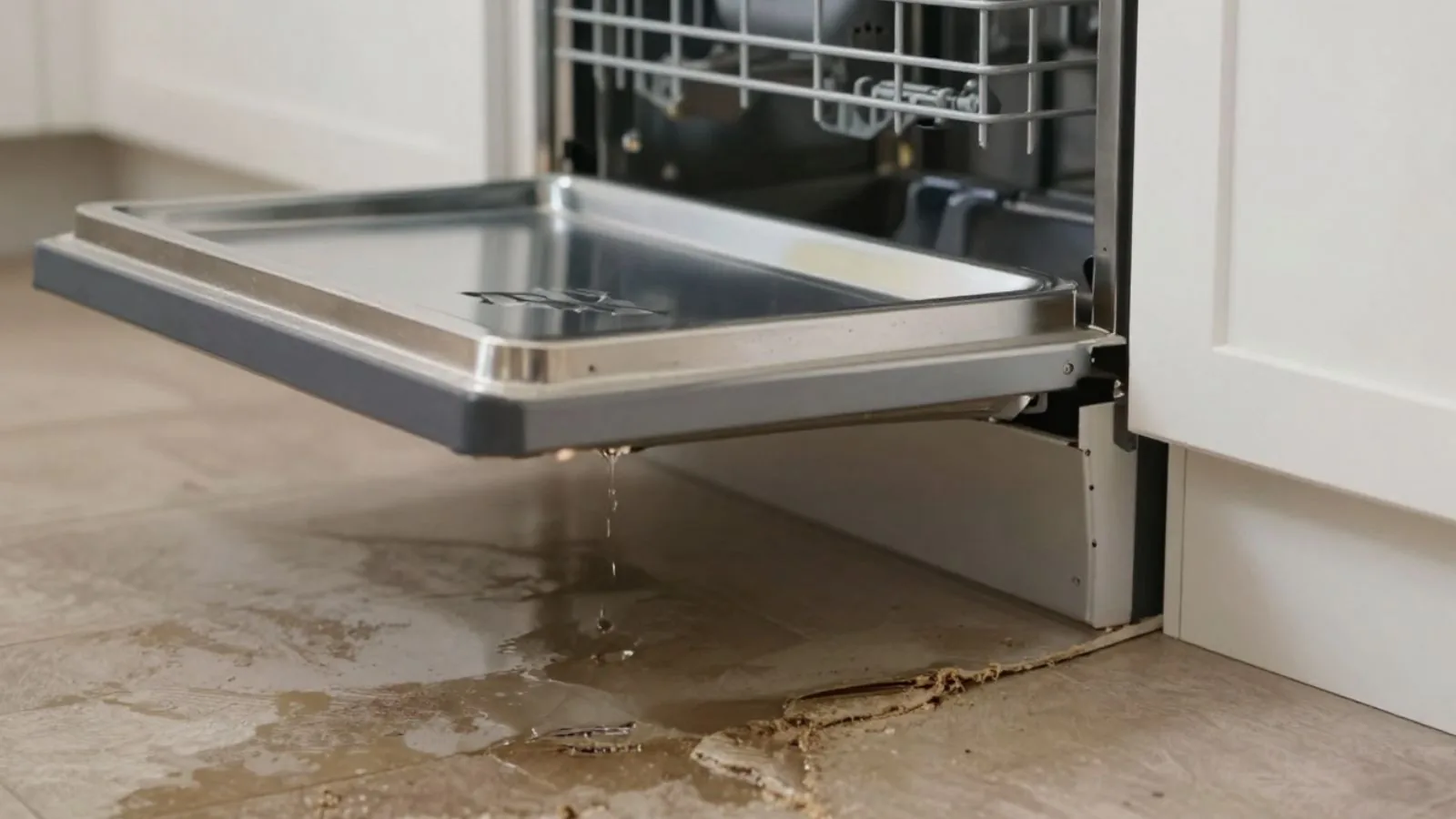
A leaking washing machine, dishwasher or refrigerator line in Syosset can soak a floor before anyone notices, so treat it as an emergency when you do. Our 24/7 line is open. Unplug the appliance only if the outlet is dry, close its supply valve and move rugs and furniture off the wet area.
Appliance leak water damage cleanup covers the water from a failed hose, a clogged drain or a faulty valve and the flooring, cabinet bases and walls it reaches. The repair of the appliance itself is a separate job for an appliance technician.
When an appliance leak is an emergency
Washing machine supply hoses are a leading source because they sit under constant pressure. A burst hose can run until someone closes the valve. Dishwasher supply lines, drain connections and door seals leak more slowly, which means the damage is often hidden under a cabinet before it shows. Refrigerator ice maker lines leak behind the unit and under the floor, and the first sign is often a swollen floor edge.
In every case the first move is the same: close the appliance's shutoff valve, or the home's main if that valve is stuck, and then call.
Why timing matters with appliance water
Fresh water from a supply hose is clean, Category 1. Water that comes from a drain line, a dishwasher or a washing machine discharge is Category 2, because it carries soap, food and grime. Clean water that sits for more than about two days can turn, which changes what has to be removed instead of dried.
Slow leaks matter too. A drip behind a dishwasher for weeks can rot a cabinet base and subfloor and grow mold, long before a puddle appears. If you notice a soft floor, a musty smell by a cabinet or paint lifting near an appliance, call and have it measured.
| Appliance | Common failure | Where water usually travels |
|---|---|---|
| Washing machine | Supply hose burst or drain hose pop-off | Across the floor, down through the ceiling below, along walls |
| Dishwasher | Supply line, door seal, or drain connection | Under cabinets, into the subfloor and toe-kick area |
| Refrigerator | Ice maker or water filter line | Behind the unit, under flooring, into the cabinet base |
| Utility sink or laundry tub | Overflow or failed fitting | Floor and wall base nearby |
How the cleanup works
The crew finds the water with a moisture meter, checking the cabinet toe-kick, the wall base and the floor around the appliance. Standing water is extracted, and wet baseboard, kickboards and any affected subfloor sections are opened if they cannot dry in place. Air movers and dehumidifiers then dry the area, and the technician reads moisture again on each visit.
Laminate and engineered flooring often swell and cup at the seams after appliance leaks, so it is common for them to need replacement while the subfloor beneath can be dried. Hardwood has more chance of recovery if drying starts early, which hardwood floor water damage repair explains.
Water spreading from the washer, dishwasher or fridge? Call the 24/7 line now.
Cost factors and insurance notes
- Water categoryWasher or dishwasher drain water is not treated like clean hose water.
- Hidden spreadWater under cabinets and in walls means more opening and more drying.
- Flooring typeTile, vinyl, laminate and wood each respond differently.
- Time since the leak beganSlow leaks cause longer-term damage and sometimes mold.
Many homeowner policies address sudden appliance discharge, though gradual leakage and wear are frequently treated differently. Keep the appliance model, photos and any receipts for repairs, and ask your insurer how your policy handles it.
A leak that started in the kitchen is also covered in kitchen water damage restoration, and clean-up from a supply line is similar to what is described for burst pipe water damage.
What to do before the crew arrives
Whatever the cause, a few safe steps taken while you wait help the crew and your insurer. These apply to appliance leak water damage cleanup as much as to any other water loss.
- Stop the source if you can reach it safely, usually by closing the main water valve.
- Stay out of standing water near outlets, appliances or the electrical panel, and call 911 or the utility if you see sparks or smell gas.
- Keep children and pets out of water that may be dirty, and do not run household vacuums or fans through it.
- Take photos and video of the damage and the source before anything is moved.
- Do not throw out wet materials until your insurer or the crew has seen them.
Professional drying and cleanup of this kind follow the ANSI/IICRC S500 standard for water damage restoration, which is why the crew records moisture readings and sets drying goals instead of guessing. If mold is found, work follows the S520 standard and New York's licensing rules.
Questions people ask about this service
Do you handle appliance leak emergencies at night or on weekends in Syosset?
Yes. The line is open 24/7. A washing machine hose that fails overnight is a common emergency call.
Should I run the appliance again after a leak?
No. Have the cause found and fixed first. Running a leaking appliance adds water and can damage electrical parts.
How do I know if water is under my kitchen cabinets?
Look for a swollen toe-kick, a soft floor edge, a musty odor or a cabinet door that no longer closes. A moisture meter confirms it without removing everything.
Can a small appliance leak cause mold?
It can, if the materials stay damp for a few days or longer. Fast drying is what prevents it, and a slow hidden leak is the main risk.
Does cleanup cover repairing the appliance?
No. The appliance or plumbing repair is done by the relevant technician. The cleanup covers water removal, drying and documentation.
Water still moving? The line is open 24/7.
Call (833) 521-1033