
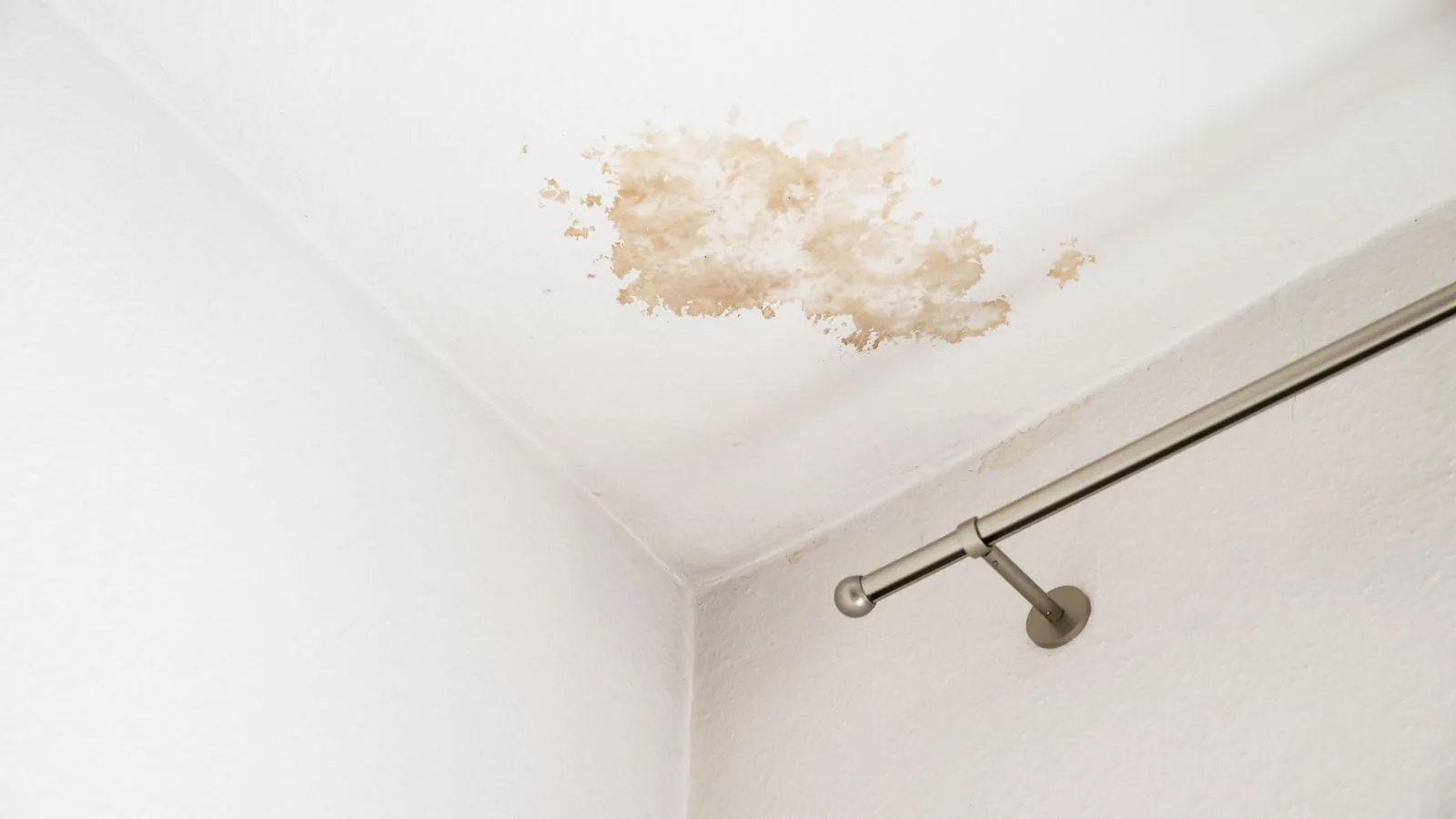
A ceiling that is stained, sagging or dripping in Syosset needs attention now, even if the leak looks small. Our 24/7 line is open. Move people and furniture out from under any bulge, switch off light fixtures on that ceiling if you can do it from a dry spot, and place a bucket under drips while you call.
Ceiling water damage repair starts with finding where the water is coming from and how much is trapped above the surface. A brown ring on drywall is usually the visible edge of a larger wet area in the insulation and framing above it.
A bulging ceiling is an emergency
Water collects on top of drywall until the board can no longer hold it. A ceiling that bows, bulges or drips steadily can release a lot of water at once. If it is bulging, a technician can relieve it in a controlled way by making a small opening so the water drains into a container rather than across the room.
Never poke a hole in a bulge yourself while standing under it or near a light fixture. Water that has reached wiring can make a fixture or the ceiling itself live. If the ceiling is wet around lights, stay out of the room and call the utility or 911 if there is any electrical concern.
Where Syosset ceiling leaks come from
A stain on the first floor ceiling usually traces to an upstairs bathroom, a washer, a supply line or a drain. A stain on a top floor ceiling points to the roof, a window or an attic duct. Wind-driven rain during a Long Island storm can push water past flashing and around chimneys, and the stain may show up several feet from the entry point.
Roof repair is a roofing trade and plumbing repair is a plumbing trade. We handle the water side: removing water and wet insulation, drying the ceiling cavity and documenting what has to be repaired afterward.
How the cause is told apart
| What you see | Likely source | What it tells the crew |
|---|---|---|
| Stain that grows after someone uses a bathroom upstairs | Supply line, drain or fixture seal | Clean supply or drain water, check the floor above |
| Stain that appears only during or after rain | Roof, flashing, window or siding | Rain intrusion, check insulation and framing for hidden spread |
| Stain that comes and goes with the weather and has a musty smell | Condensation or a slow leak | Long-term moisture, check for mold growth |
| Sudden drip with a rush of water | Failed line or appliance above | Treat as a pipe loss and shut off the water |
What repair looks like
The crew confirms the extent with moisture meters and a thermal camera, then removes the wet portion of the ceiling, usually a section extending a little past the visible stain. Wet insulation above comes out too, because it holds water and dries slowly. The cavity is then dried with air movers and dehumidifiers, with readings taken until the framing is dry.
Only after that is the ceiling closed up and refinished. Painting over a damp ceiling traps moisture and invites mold, so drying comes first, and the stain blocker and paint come last.
Seeing a ring, a bulge or a drip overhead? Call and tell the dispatcher what floor it is on and what is above it.
Cost factors for ceiling water damage
- Area openedThe size of the wet section, not just the visible stain, sets how much board and insulation comes out.
- Ceiling typeFlat drywall, textured ceilings and plaster each take different repair work.
- Source and durationA leak that has run for weeks is wetter than one found right away.
- Access aboveAttics and tight upper floors take longer to inspect and dry.
Coverage for ceiling damage depends on what caused it. Sudden and accidental water from a pipe is often treated differently from long-term seepage or wear. Photos of the stain over time, moisture readings and the repair scope help your insurer understand the loss. Ask your insurer what your policy covers.
Related pages include water heater leak cleanup, for losses that begin with a tank, and wall and drywall water damage repair.
What to do before the crew arrives
Whatever the cause, a few safe steps taken while you wait help the crew and your insurer. These apply to ceiling water damage repair as much as to any other water loss.
- Stop the source if you can reach it safely, usually by closing the main water valve.
- Stay out of standing water near outlets, appliances or the electrical panel, and call 911 or the utility if you see sparks or smell gas.
- Keep children and pets out of water that may be dirty, and do not run household vacuums or fans through it.
- Take photos and video of the damage and the source before anything is moved.
- Do not throw out wet materials until your insurer or the crew has seen them.
Professional drying and cleanup of this kind follow the ANSI/IICRC S500 standard for water damage restoration, which is why the crew records moisture readings and sets drying goals instead of guessing. If mold is found, work follows the S520 standard and New York's licensing rules.
Questions people ask about this service
Do you handle ceiling water emergencies at night or on weekends in Syosset?
Yes. The line is open 24/7. A ceiling that is bulging or dripping heavily at night is exactly the kind of call the dispatcher expects.
Is it safe to leave a stained ceiling alone?
Only if it is dry and the source is fixed. A stain that is still damp can keep growing, and wet drywall and insulation above can sag. Have it checked, especially if it smells musty.
Should I paint over the stain?
Not until the ceiling and the cavity above are confirmed dry. Paint over damp drywall hides the problem and can trap moisture. A moisture meter reading is the safe signal.
Do I need to cut out the whole ceiling?
Usually no. The wet section and a margin around it are removed, and the rest stays. A thermal camera and meter show where the wet area ends.
My ceiling leaks only when it rains. Who should I call first?
A roofer finds and fixes the entry point, and the restoration crew removes the wet materials and dries the cavity. Call the restoration line if the ceiling is wet or sagging, and have the roof checked right after.
Water still moving? The line is open 24/7.
Call (833) 521-1033