
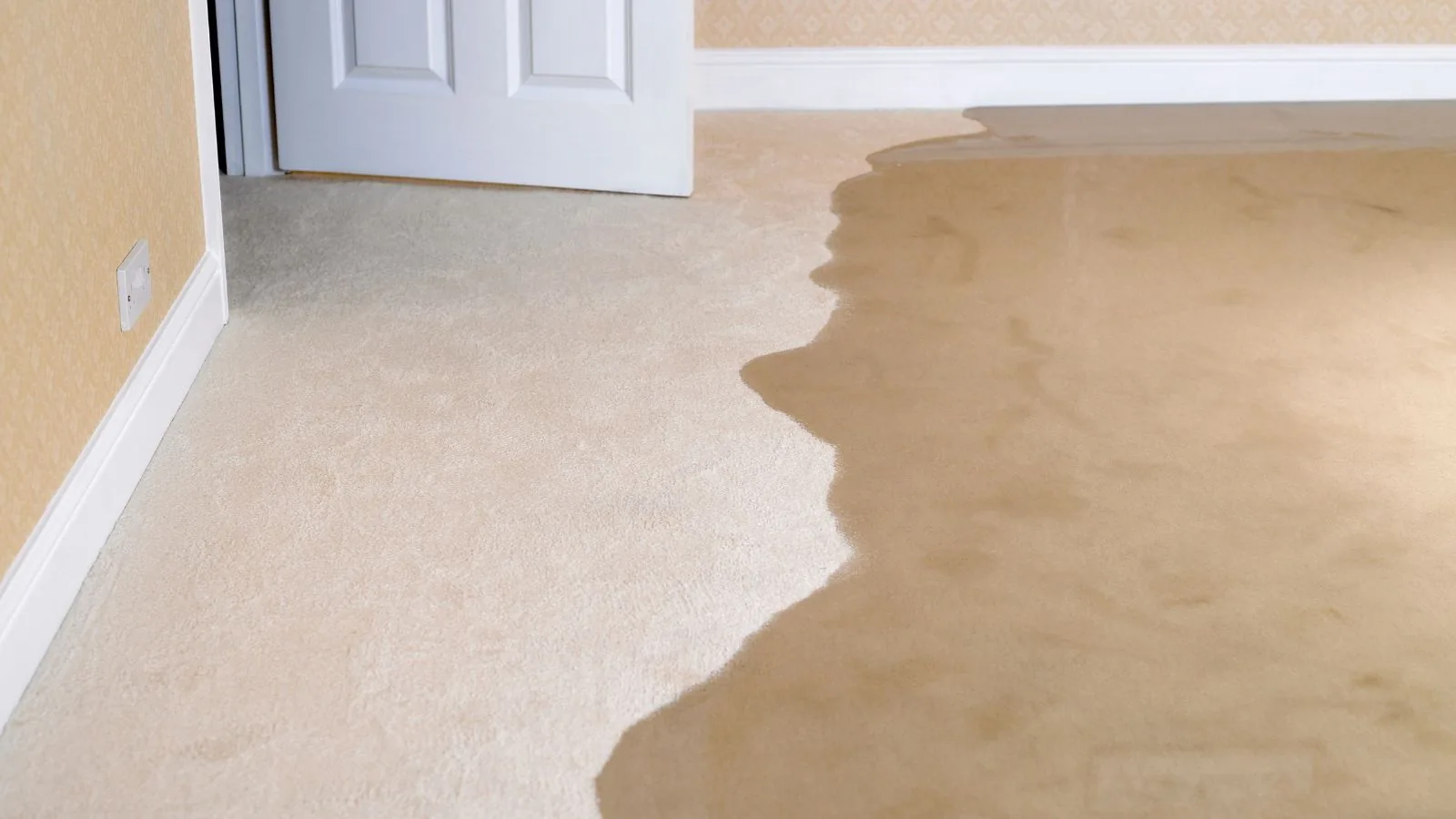
Wet carpet is the most common water damage case, and the right answer depends on the water. In Syosset, carpet that was soaked by a clean supply line may dry in place, while carpet that touched sewage or flood water must go.
Carpet water damage restoration decides what can be extracted and dried and what must be removed, then dries the pad, subfloor and tack strips underneath. The pad is usually the first thing to go, because it holds water and dries slowly.
Carpet, pad and subfloor are three layers
Carpet is the visible surface, but it sits over a foam or fiber pad and then a subfloor. Water passes through the carpet quickly into the pad, which acts like a sponge. Even after the carpet surface feels dry, the pad and subfloor may still be wet.
That layering is why a quick extraction pass is not enough. The goal is to dry all three layers, or remove the ones that cannot be dried.
Save, or replace: what decides it
| Water source | Time wet | Carpet and pad |
|---|---|---|
| Clean supply water (Category 1) | Under 24 to 48 hours | Carpet often saved, pad often replaced |
| Appliance or gray water (Category 2) | Any | Carpet may be cleaned if treated early, pad replaced |
| Sewage or flood water (Category 3) | Any | Carpet and pad removed and discarded |
| Any category | Several days | Mold risk rises, replace and dry the subfloor |
The category comes first, then time. A clean leak from a pipe in the ceiling is a very different case from a sump failure with dirty groundwater. A technician identifies the source before deciding.
How the process works
- Extract water from the carpet with a high-powered extractor, then lift the carpet from the tack strips in a corner to reach the pad.
- Remove the pad if it is soaked or contaminated, and set up air movers to dry the carpet and the floor beneath.
- Use dehumidifiers to remove moisture from the air so the subfloor can dry.
- Take moisture readings of the subfloor and base of walls on each visit, and clean or sanitize as the water category requires.
- Reinstall the carpet over new pad once the floor is dry, or replace the carpet if it could not be saved.
Carpet stretched back after drying often needs re-stretching, which is a flooring task done after drying. Rebuild work is separate from the water damage work.
Odor is another clue. Fresh clean water has no smell, while a sour or earthy smell from carpet that has been wet for a day or more points to bacteria and early mold growth in the pad. That smell is a reason to replace the pad and to dry and clean the subfloor, even when the carpet itself looks fine.
Carpet wet or squishy underfoot? Call and tell the dispatcher what the water came from.
Cost factors and claim notes
- Water categoryContaminated water means replacement.
- Pad typePad is commonly replaced, and carpet is the larger decision.
- SubfloorWood subfloor takes time to dry, concrete takes longer.
- Carpet areaWall-to-wall carpet is dried or replaced as a whole.
Insurers usually want evidence of the source, the date and the response. Photographs of the wet carpet, the source of the water and moisture readings are useful. Ask your insurer how your policy handles carpet and pad.
If the wet carpet is in a lower level, basement water damage cleanup has more detail, and water extraction explains the first step.
What to do before the crew arrives
Whatever the cause, a few safe steps taken while you wait help the crew and your insurer. These apply to carpet water damage restoration as much as to any other water loss.
- Stop the source if you can reach it safely, usually by closing the main water valve.
- Stay out of standing water near outlets, appliances or the electrical panel, and call 911 or the utility if you see sparks or smell gas.
- Keep children and pets out of water that may be dirty, and do not run household vacuums or fans through it.
- Take photos and video of the damage and the source before anything is moved.
- Do not throw out wet materials until your insurer or the crew has seen them.
Professional drying and cleanup of this kind follow the ANSI/IICRC S500 standard for water damage restoration, which is why the crew records moisture readings and sets drying goals instead of guessing. If mold is found, work follows the S520 standard and New York's licensing rules.
Questions people ask about this service
Can wet carpet be dried without removal?
Sometimes, if the water was clean and drying begins quickly. The pad often has to be replaced, and the carpet is lifted so the floor underneath can be dried.
How soon does wet carpet start to grow mold?
Mold can begin to grow within a few days in damp conditions, which is why drying within the first day or two matters.
Why does my carpet smell musty after drying?
The pad or subfloor may still be damp, or the carpet may have absorbed contaminants. A moisture reading and, if needed, replacement of the pad address it.
Is it safe to walk on wet carpet?
If the water is clean, it is generally fine. If it could be sewage or flood water, keep out. Also avoid it if the water is near outlets.
Can I pull up the carpet myself?
You can for a small, clean spill if you are careful, but a professional extraction and drying is better for anything larger, because wet pad and subfloor are easy to miss.
Water still moving? The line is open 24/7.
Call (833) 521-1033