
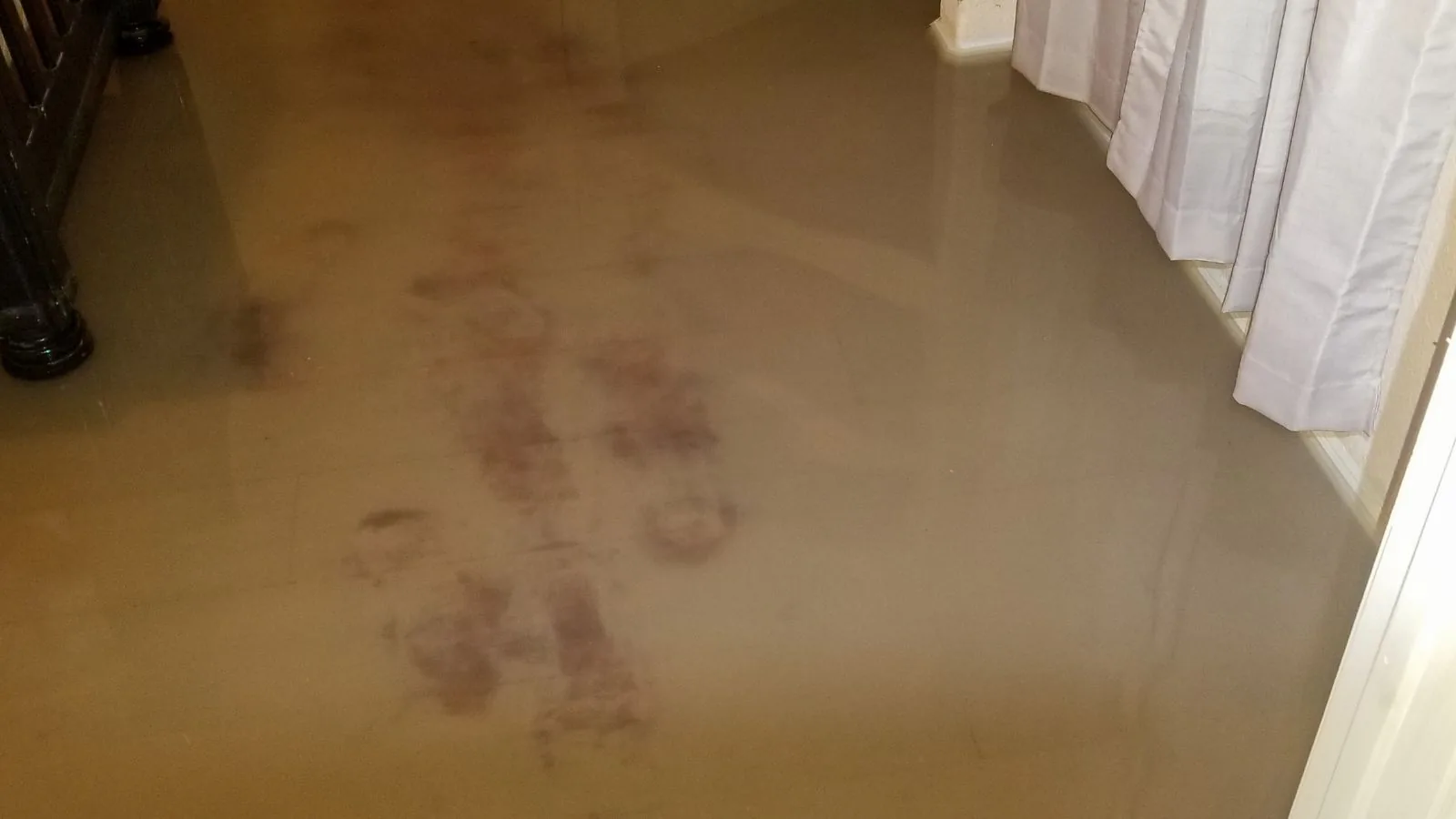
Sewage coming up through a toilet, tub or floor drain in Syosset is an emergency, and it is a health hazard from the first moment. Our 24/7 line is open. Keep people and pets out of the affected rooms, do not touch the water, do not run the water or flush anything, and call before you try to clean it yourself.
Sewage backup cleanup removes Category 3 water, the most contaminated class under the ANSI/IICRC S500 standard, and takes out the materials it touched. It also sanitizes what remains and dries the structure so the space can be used again.
Toilet gurgling, drains bubbling, a smell from the floor drain
Few people search for a Category 3 cleanup. They search for what they see: a toilet that bubbles when the washer drains, brown water in a basement tub, a sewer smell in a finished room. Those are signs of a blocked or backed-up line, and they lead to this work.
If several fixtures slow down or gurgle at once, the blockage is probably in the main line rather than a single drain. Stop using water in the house and have the line cleared by a plumber, because every flush adds more to the problem.
Sewage backup emergency: what to do first
- Stay outKeep everyone, especially children, older adults and anyone with a weakened immune system, out of the water.
- Stop using waterDo not flush, run the washer or use sinks. That water has nowhere to go.
- Power safetyIf water reached outlets or the panel, stay out and call the utility or 911 before calling us.
Never treat sewage with household fans and a shop vacuum. Contaminated water needs protective gear, proper disposal and sanitizing that household tools cannot provide.
Why a sewer line backs up, and who is responsible
Common causes include roots in the lateral line, grease and wipes that clog it, a collapsed or offset pipe and, in storms, a sewer system overwhelmed by volume. Whether your home connects to a public sewer or uses a private cesspool or septic system changes who you call first, so check with the Town of Oyster Bay or the sewer district serving your street if you are not sure.
A plumber or the utility handles the blockage and the pipe. We handle everything the water touched.
How the cleanup is done
- Isolate the affected area and put on protective equipment suited to contaminated water.
- Remove the water, then remove porous materials that touched it: carpet, pad, insulation and often the lower section of drywall.
- Clean and sanitize hard surfaces and framing using appropriate antimicrobial products.
- Dry the structure with air movers and dehumidifiers, and verify with moisture readings.
- Dispose of contaminated materials properly, and document the loss.
| Material | Touched by sewage | Usual result |
|---|---|---|
| Carpet and pad | Yes | Removed and discarded |
| Drywall and insulation | Yes | Removed to above the contact line |
| Concrete slab and tile | Yes | Cleaned and sanitized, then dried |
| Wood framing | Yes | Cleaned and dried, replaced if damaged |
Sewage in the house? Keep out of the water and call the 24/7 line.
Costs, insurance and why it differs from other water
- Area contaminatedMore rooms touched means more removal and sanitizing.
- Materials affectedPorous materials are replaced, which raises the rebuild side.
- DurationSewage that sits for a day or more spreads further into materials.
- AccessFinished basements with built-ins take longer to clear.
Many homeowner policies do not cover sewer or drain backup unless a specific endorsement is in place, and the limits on those endorsements vary. Read the policy language and ask your insurer, rather than assuming either way. Photos and readings still help any claim.
If sewage came with storm water, see flood damage restoration. For a below-grade loss, see basement water damage cleanup.
What to do before the crew arrives
Whatever the cause, a few safe steps taken while you wait help the crew and your insurer. These apply to sewage backup cleanup as much as to any other water loss.
- Stop the source if you can reach it safely, usually by closing the main water valve.
- Stay out of standing water near outlets, appliances or the electrical panel, and call 911 or the utility if you see sparks or smell gas.
- Keep children and pets out of water that may be dirty, and do not run household vacuums or fans through it.
- Take photos and video of the damage and the source before anything is moved.
- Do not throw out wet materials until your insurer or the crew has seen them.
Professional drying and cleanup of this kind follow the ANSI/IICRC S500 standard for water damage restoration, which is why the crew records moisture readings and sets drying goals instead of guessing. If mold is found, work follows the S520 standard and New York's licensing rules.
Questions people ask about this service
Do you handle sewage backup emergencies at night or on weekends in Syosset?
Yes. The line is open 24/7. Sewage in a living space should not wait until morning, so call and keep people out of the area.
Is sewage backup the same as regular water damage?
No. It is Category 3 and carries bacteria and pathogens, so it needs protective gear, removal of porous materials and sanitizing.
Why is my floor drain bubbling and smelling?
It often means a blockage in the line, or that the trap has dried out, and it can be an early sign of a backup. Stop using water and have a plumber check the line.
Can I clean up a small sewage backup myself?
For anything beyond a very small, contained amount on a hard surface, it is not recommended. Contaminated water is a health risk, and the hidden spread into walls and subfloor is hard to judge without meters.
How do I know if my home is on a sewer or a cesspool?
Your property records, the Town of Oyster Bay or the sewer district for your street can tell you. A plumber can also confirm where your lateral line runs.
Water still moving? The line is open 24/7.
Call (833) 521-1033