
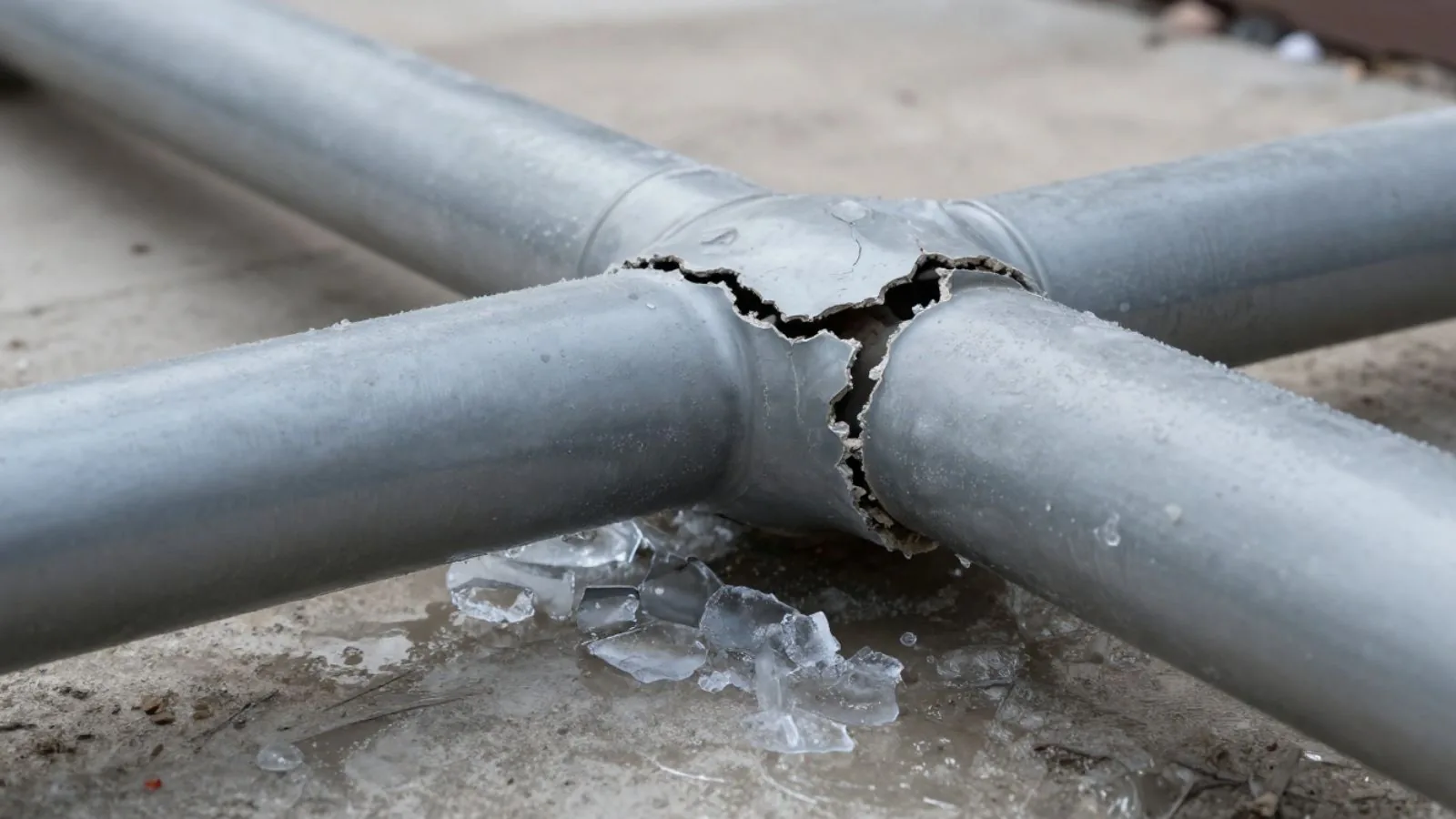
A frozen pipe in Syosset becomes a water damage emergency the moment it thaws or splits. Our 24/7 line is open on the coldest nights too. If a pipe is frozen but not yet leaking, shut off the water to that part of the house, open the faucet slightly and call, and never use an open flame to thaw it.
Frozen pipe water damage restoration deals with what the freeze leaves behind: a split line that sprays or drips inside a wall, a ceiling or a basement, and the wet insulation, drywall and flooring around it.
When a frozen pipe is an emergency
A frozen pipe is a warning. Ice blocks the line, pressure builds behind it and the pipe can split. The leak often starts only after the ice melts, which is why water appears hours after the cold snap breaks, sometimes when nobody is home.
Safety first
Do not use a torch, a heat gun on high or any open flame to thaw a pipe. If a pipe has already split and water is spraying, close the main valve. If water is near the electrical panel, outlets or fixtures, stay out and call the utility or 911 before calling us.
Where pipes freeze in Syosset houses
Long Island winters bring overnight freezes even in a year with little snow. The pipes at greatest risk are those in exterior walls, in garages and unheated additions, under kitchen and bath cabinets on outside walls, and near crawl space or attic vents. A kitchen sink fed from an exterior wall is a classic case.
Houses here range from mid-century builds to newer construction, and a pipe run through an addition or a converted garage may sit in a colder cavity than the rest of the system. Where a freeze happened once, it can happen again, and it is worth telling the plumber about when the repair is made.
Signs a pipe is frozen or has already split
- A faucet that runs only a trickle or not at all, while others work.
- Frost on a visible pipe, or a pipe that feels cold and stiff to the touch.
- A bulging or cracked section of pipe, or water stains growing on a wall or ceiling.
- A sudden drop in water pressure, or the sound of water running when nothing is on.
Cleanup and drying after a freeze split
Once the line is shut off, the work is the same as any pipe loss with a few differences. Cold cavities dry slowly, so the crew watches readings in exterior walls closely. Insulation soaked by a freeze leak loses its value and is usually removed. If the pipe was in an unheated area, the crew also checks the framing and sill plates that stayed damp.
Water, cleanup and drying are what we do. Thawing, repair and insulation upgrades belong to a plumber and a contractor.
| Where the pipe split | What gets wet | Typical response |
|---|---|---|
| Inside an exterior wall | Insulation, drywall, baseboard, floor edge | Open the wall, remove wet insulation, dry the cavity |
| Above a ceiling | Ceiling drywall, insulation, light fixtures | Relieve pooled water safely, remove sagging board, dry the space above |
| Basement or garage line | Slab surface, wall base, stored items | Extract, dry and move contents out of the wet zone |
| Under a sink | Cabinet base, subfloor, adjoining flooring | Remove wet cabinet parts if needed, dry the subfloor |
A pipe froze overnight and you see water now? Call the 24/7 line and describe where it is.
Cost factors, insurance and what to document
- Hours before discoveryA split that ran while the house was empty usually wets more than one that was caught in minutes.
- Cold cavitiesWalls on the cold side of the house dry slower, which can add equipment days.
- MaterialsPlaster, drywall, hardwood and tile need different handling.
- ContentsFurniture and stored boxes near the leak add to the work.
Freeze-related pipe damage is a loss many policies address, but conditions such as heating requirements while the home is vacant vary. Your insurer decides coverage. Dated photos, moisture readings and a written scope help your claim, and the dispatcher will tell you what to capture.
Related reading on this site includes burst pipe water damage and wall and drywall water damage repair.
What to do before the crew arrives
Whatever the cause, a few safe steps taken while you wait help the crew and your insurer. These apply to frozen pipe water damage restoration as much as to any other water loss.
- Stop the source if you can reach it safely, usually by closing the main water valve.
- Stay out of standing water near outlets, appliances or the electrical panel, and call 911 or the utility if you see sparks or smell gas.
- Keep children and pets out of water that may be dirty, and do not run household vacuums or fans through it.
- Take photos and video of the damage and the source before anything is moved.
- Do not throw out wet materials until your insurer or the crew has seen them.
Professional drying and cleanup of this kind follow the ANSI/IICRC S500 standard for water damage restoration, which is why the crew records moisture readings and sets drying goals instead of guessing. If mold is found, work follows the S520 standard and New York's licensing rules.
Questions people ask about this service
Do you handle frozen pipe emergencies at night or on weekends in Syosset?
Yes. The line is open 24/7, and cold snaps tend to cause the worst nights. Call as soon as you see water, and shut off the supply to the affected area first.
Is it safe to thaw a frozen pipe myself?
Gentle warmth from a hair dryer on a low setting, or warm air in the room, is the safer approach for a pipe you can reach. Never use open flame. If the pipe is inside a wall, or you see any crack, close the water and call.
Will a frozen pipe always burst?
No. Many freeze and thaw without splitting. The risk is higher with older pipe, tight bends and pipes in exterior walls, and the leak often shows only after the thaw.
How long does it take to dry a wall after a frozen pipe leak?
It depends on the wall and the temperature. Exterior and cold cavities can take longer than interior walls. The crew reads moisture each visit and stops only when the materials reach the dry standard.
What should I check before a cold night to prevent this?
Know where your main shutoff is, open cabinet doors on exterior walls, let a faucet drip on the coldest nights and keep the heat on if you leave. These steps lower the risk but do not remove it.
Water still moving? The line is open 24/7.
Call (833) 521-1033