
If the water is gone but the walls feel cool and damp, the carpet is still musty or the air feels heavy, the building is still wet. Structural drying is what finishes the job after water extraction, and in Syosset it is done with measured equipment, not guesswork.
Structural drying and dehumidification removes moisture from framing, drywall, subfloor and air using air movers and dehumidifiers, with moisture readings taken until materials return to a dry standard. It is the step that prevents warping, rot and mold after the water is out.
Walls still damp days after the water is gone
People ask how to dry out a wet wall, why a floor still feels damp or how to stop a musty smell after a leak. Those are the same question: how do you remove the moisture you can no longer see. The answer is structural drying.
A wall can look dry on the outside while the cavity behind it, the insulation and the bottom plate are still wet. Without airflow and dehumidification that moisture stays for weeks and starts to feed mold.
How the drying process works
Wet materials release moisture into the air as vapor. The crew sets air movers to push dry air across surfaces and into cavities, and LGR dehumidifiers pull the humidity out of the air so the materials can keep releasing. The balance of airflow, temperature and humidity is monitored with a psychrometer so the room stays in a range where drying continues.
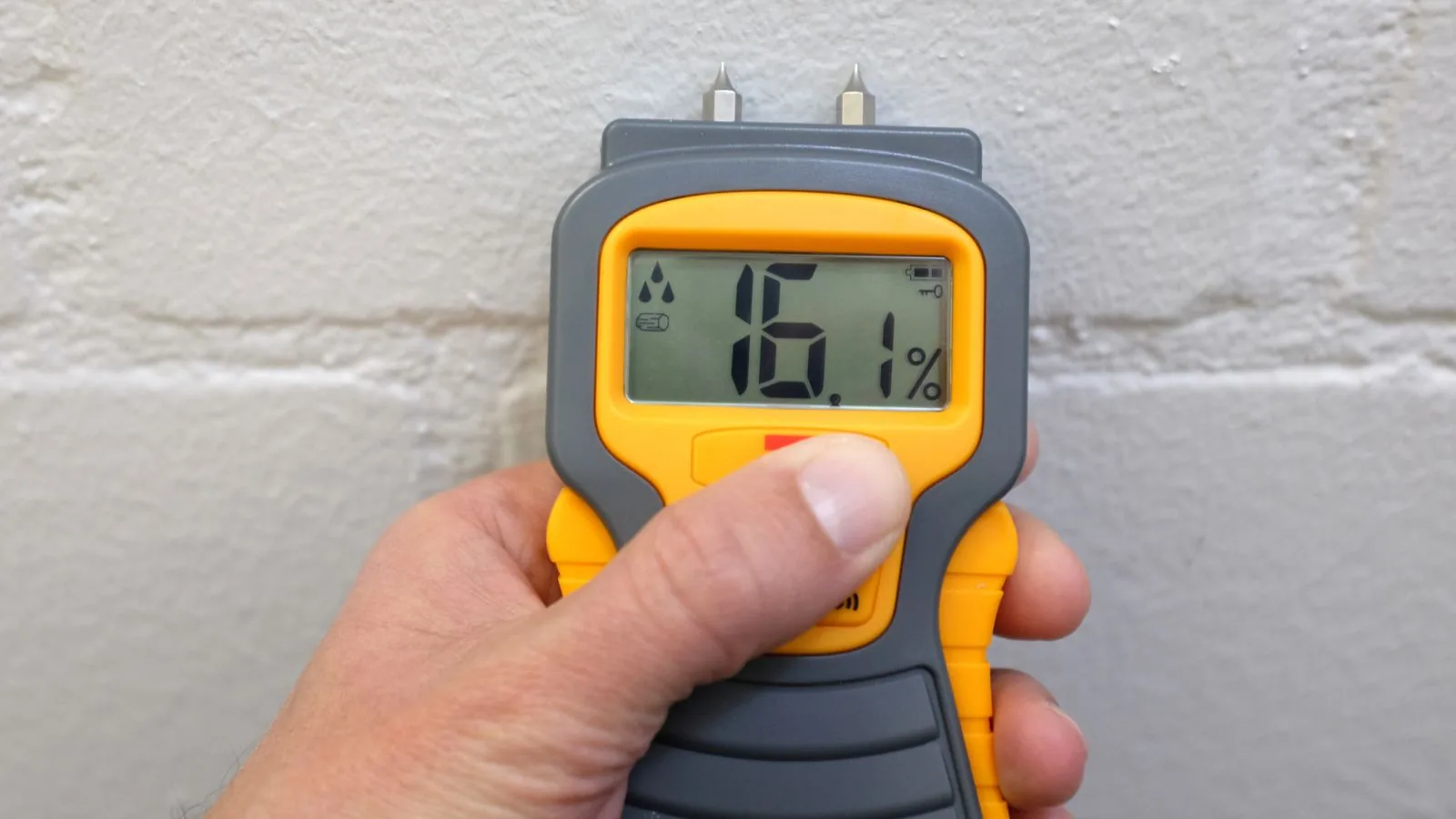
Technicians record moisture readings at set points on each visit and compare them to dry reference readings from unaffected material. When readings reach the dry standard, equipment comes out, and not before.
| Tool | What it does | Where it is used |
|---|---|---|
| Air mover | Pushes air across wet surfaces | Floors, walls and carpet |
| LGR dehumidifier | Removes moisture from the air at low humidity | Whole affected area |
| Moisture meter | Reads moisture in drywall, wood and concrete | Every visit |
| Thermal camera | Shows cooler, wetter areas behind surfaces | Finding hidden water |
| Drying mats and panels | Pull water from hardwood and subfloor | Wood floors |
How long drying takes, and what changes it
There is no fixed number of days. Thin drywall may dry in a few days, and thick framing, plaster and concrete take longer. Humid Long Island summers make drying harder because the outdoor air holds a lot of moisture, which is one reason dehumidifiers matter so much.
The ANSI/IICRC S500 standard guides the process, covering water categories and classes, monitoring and drying goals. We use it as the technical reference and not as a claim of certification.
Water removed but the area still feels damp? Call and ask for a moisture check.
When materials cannot be dried
Some materials are replaced, not dried. Pad, insulation that stayed wet, drywall that has started to deteriorate and anything contaminated by sewage or flood water usually come out. The goal is to dry what can be saved and remove what cannot, based on readings.
Drying also pairs with the rest of the process: water extraction comes first, and mold concerns are addressed under mold remediation when growth is present.
Cost factors and insurance
- Affected areaMore square footage and more rooms means more equipment.
- MaterialsPlaster, concrete and hardwood dry slowly compared with thin drywall.
- Humidity and temperatureHumid weather slows drying.
- Days of equipmentDaily readings decide how many days equipment stays.
Insurers commonly ask for proof of the drying process: dated readings, equipment logs and photos. A written drying record can support a claim for a loss your policy covers. Ask your insurer what your policy covers.
What to do before the crew arrives
Whatever the cause, a few safe steps taken while you wait help the crew and your insurer. These apply to structural drying and dehumidification as much as to any other water loss.
- Stop the source if you can reach it safely, usually by closing the main water valve.
- Stay out of standing water near outlets, appliances or the electrical panel, and call 911 or the utility if you see sparks or smell gas.
- Keep children and pets out of water that may be dirty, and do not run household vacuums or fans through it.
- Take photos and video of the damage and the source before anything is moved.
- Do not throw out wet materials until your insurer or the crew has seen them.
Professional drying and cleanup of this kind follow the ANSI/IICRC S500 standard for water damage restoration, which is why the crew records moisture readings and sets drying goals instead of guessing. If mold is found, work follows the S520 standard and New York's licensing rules.
Questions people ask about this service
How do I know if my walls are still wet after a leak?
Look for a cool or clammy feel, a musty smell, paint that bubbles or baseboards that lift. A moisture meter and thermal camera give a definite answer without opening the wall.
Can I dry a wet room with fans from the hardware store?
Fans move air but do not remove humidity from the room, and they do not reach inside walls. For anything beyond a small, clean spill, dehumidifiers and measured monitoring are needed.
How long does structural drying take?
It depends on the materials, the size of the loss and the humidity. Many jobs take several days, and the readings decide when to stop.
Can I rent air movers and dehumidifiers instead?
Drying equipment is placed and monitored by the crew as part of the job, because placement and daily readings decide whether it works. Equipment rental is not something this page offers.
Why are there loud machines running in my house?
Air movers and dehumidifiers run continuously. They are what remove moisture from the structure, and they are checked and adjusted at each visit.
Does drying prevent mold?
It reduces the risk by removing the moisture mold needs, but it cannot promise that mold will not develop. Starting early and reaching the dry standard is what lowers the risk.
Water still moving? The line is open 24/7.
Call (833) 521-1033