
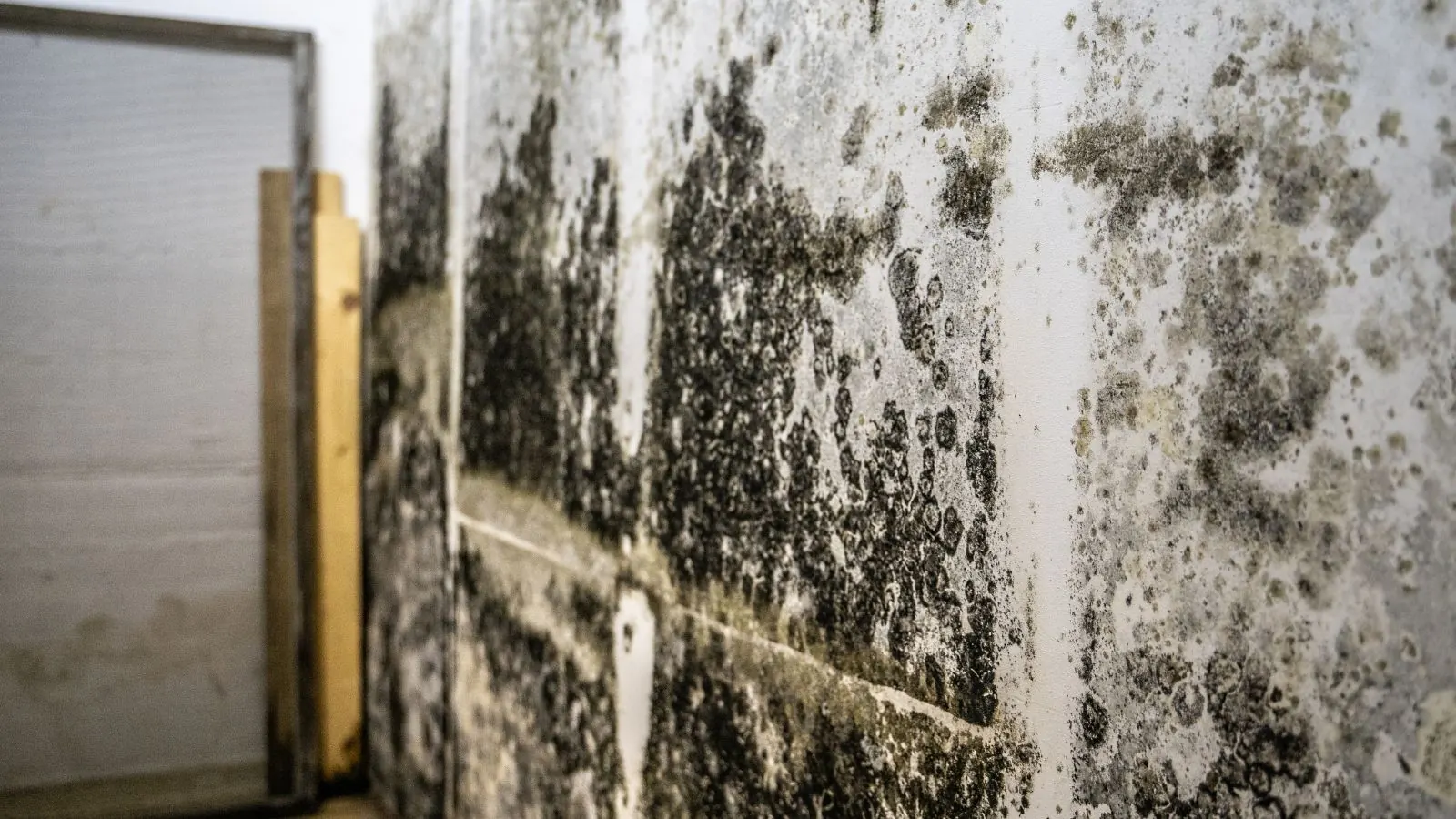
The phrase black mold gets used loosely. Color alone does not identify a mold, and only testing by a qualified professional can say what is growing.
This guide explains what odors suggest, where to look and what to do next, without making health claims.
Common descriptions of a mold smell
- Musty, like a damp basement or an old closet.
- Earthy, like wet soil or leaves.
- Sour or stale, like a damp towel left in a bag.
- Sharp or fermented, sometimes described as similar to old bread.
Different materials and different microbes produce different odors, and cleaning products, damp insulation and plumbing problems can produce similar smells. That is why smell is a clue and not a result.
Where musty smells hide
The odor often comes from a place you cannot see: inside a wall, under flooring, above a ceiling or in a crawl space. Moisture meters and thermal cameras find damp areas without opening everything, and the crew uses them as described under wall and drywall water damage repair.
| Where you smell it | Possible cause | Next step |
|---|---|---|
| Basement or lower level | Damp slab, a leak or poor drainage | Check for water, run a dehumidifier, call for a moisture check |
| Near a bathroom or kitchen | Slow leak behind a wall or under a cabinet | Moisture mapping around fixtures |
| Near an air vent | Condensation or a wet air handler | Have the HVAC system checked |
| A closet on an exterior wall | Condensation or a roof leak | Check the wall and the roof |
| Under carpet | Wet pad or subfloor | Lift a corner and check the pad |
What to do about the smell
- Look for the source: a stain, a wet spot, a dripping pipe or high humidity.
- Fix any active leak and dry the area quickly.
- Use a dehumidifier and good airflow, and do not mask the odor with sprays.
- If the smell persists after drying, call for an assessment.
If visible growth appears or the smell is strong in a large area, the mold remediation page explains how New York regulates the assessment and removal.
Smell something musty and not sure why? Call and describe where, and ask for a moisture check.
Why smell alone can mislead
Several things produce musty odors that have nothing to do with mold: a wet dog, damp laundry, a dry drain trap or a plumbing vent that is leaking sewer gas. A strong chemical smell may come from a spill or a cleaning product. The point is that an odor tells you where to look, not what you will find.
If the smell is stronger near a drain, check whether the trap has dried out, since pouring water down it can fix that. If it is stronger near a wall or a ceiling, moisture is a better suspect.
A simple search routine
- Follow your nose room by room and note where the smell is strongest.
- Look for stains, peeling paint, warped baseboards or soft flooring in that spot.
- Check under sinks, behind appliances and around the water heater.
- Look at the ceiling beneath any bathroom or roof area.
- Run a dehumidifier for a day and see whether the smell drops.
If the smell persists and you cannot find a source, a moisture meter and thermal camera are the next step. They find damp areas inside walls and under floors without tearing anything out.
What to do while you wait for an answer
Keep the affected room closed, and turn off fans that pull air through it. Lower the humidity with a dehumidifier if the space is damp, and move belongings out of the area if it is easy to do so. Do not spray the area with a scented product, since that hides the smell without telling you anything.
Write down when you first noticed the odor, whether it changes after rain, and which rooms are affected. That record helps whoever inspects the property find the cause faster.
If anyone in the home has a breathing concern, ask their doctor about it. A restoration crew can find moisture, but it cannot advise on health.
For reference, professional water damage work follows the ANSI/IICRC S500 standard, and mold work follows S520. Ask any company you consider which standards it works to.
Syosset note: humidity and lower levels
Long Island summers are humid, and a lower level without enough dehumidification can smell musty even without a leak. In Syosset, a finished basement or a closet on an exterior wall is a common spot, and an air conditioner that drips into a ceiling can feed the same smell. The AC leak water damage page explains that cause.
Whether your house has a crawl space, a basement or a slab is the first question a crew asks, because it decides where to check first. The pages for Woodbury and Jericho cover nearby areas the same crew reaches.
Questions homeowners ask
Does a musty smell always mean mold?
No. It is a sign of moisture and microbial activity, which may or may not be mold. A moisture check and, if needed, assessment will tell you.
Can I identify black mold by its color?
No. Many molds look dark, and color alone does not identify them. Professional testing can.
How do I get rid of a musty smell in a Syosset basement?
Find and fix the moisture source, dry the space and run a dehumidifier. If the smell comes back or you find growth, have it assessed.
Are health symptoms a sign of mold in my home?
This guide cannot give medical advice. Talk to a physician about symptoms, and have the home checked for moisture separately.
Have water damage right now? The line is open 24/7.
Call (833) 521-1033