
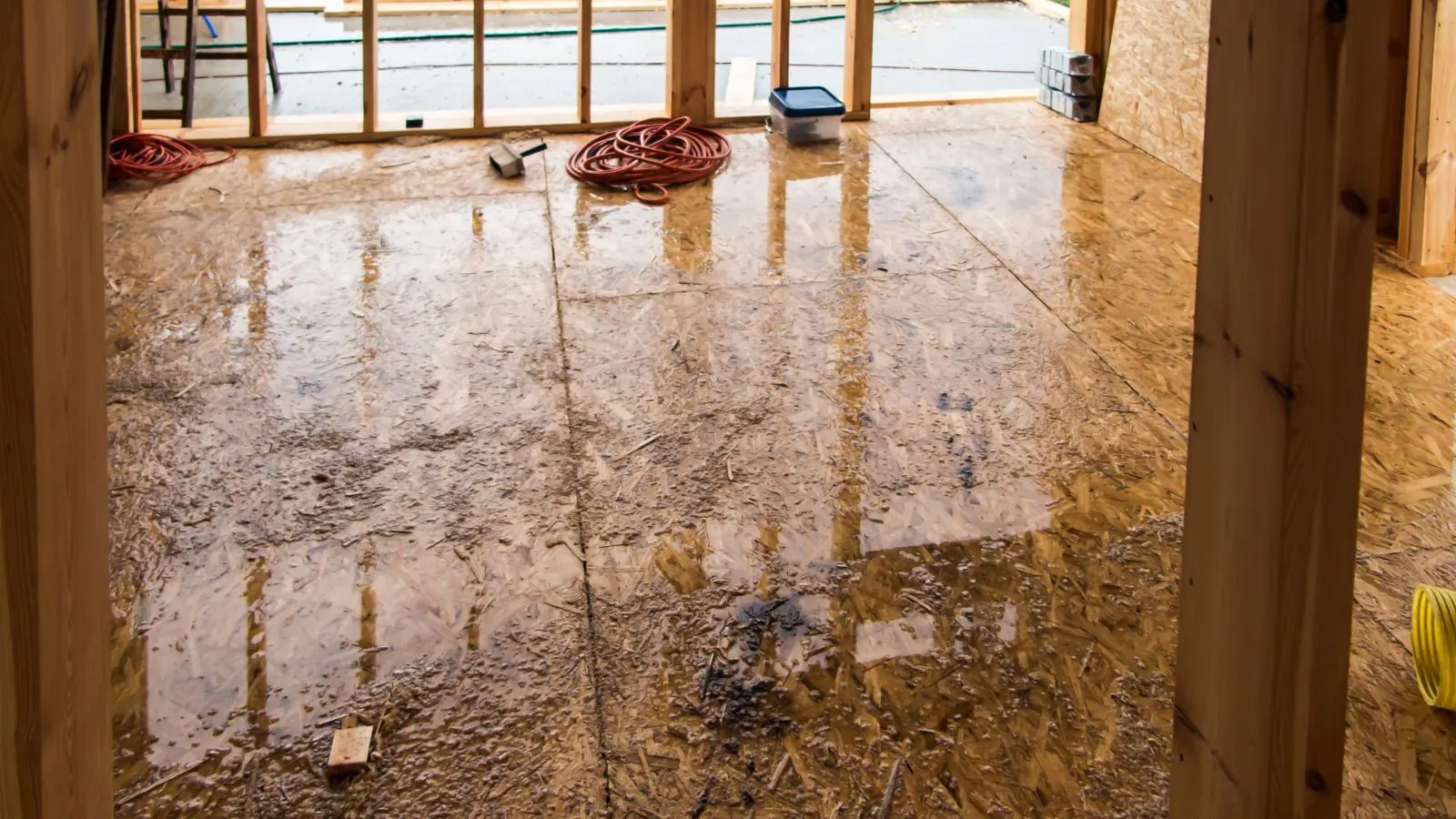
Knowing the category helps you understand an estimate, talk to your insurer and decide what to touch yourself.
This guide explains each category with examples.
Category 1: clean water
Category 1 water comes from a sanitary source: a broken supply line, a leaking faucet or rain that has not touched dirty surfaces. It does not pose a substantial risk when it first escapes. But it does not stay Category 1 forever, since time and contact with dirty materials can change it.
Category 2: gray water
Category 2 water carries some contamination that could cause discomfort or sickness if contacted or consumed. Typical sources are dishwasher or washing machine discharge, toilet overflow with urine but no feces and sump pump failure. Category 1 water that sat for a day or two can become Category 2.
Category 3: black water
Category 3 water is grossly contaminated and may carry pathogens. It includes sewage, flood water from rivers or the ground, and standing water that has supported growth. Porous materials touched by it are removed, and the structure is sanitized.
| Category | Examples | Typical response |
|---|---|---|
| 1 (clean) | Supply line burst, faucet leak, clean rain intrusion | Extract, dry, many materials can be saved |
| 2 (gray) | Washing machine or dishwasher discharge, sump failure | Extract, clean, remove carpet pad and some porous items |
| 3 (black) | Sewage, flood water, long-standing water | Protective gear, remove porous materials, sanitize, dry |
Water can move up a category
A clean pipe leak that is not dried can degrade within one to two days, and heat, dirt and organic material speed it. This is why the first hours matter, and why a crew asks how long the water has been there.
Classes are different from categories
The S500 standard also describes classes, one to four, which describe how much material is wet and how fast it will release moisture. Category is about contamination, class is about the amount of water and the materials. Both shape the plan.
For sewage specifically, see sewage backup cleanup. For flood water, see flood damage restoration. A basic clean-water loss is described under water extraction.
Not sure what category your water is? Call and describe the source. The dispatcher will tell you what to avoid touching.
What the category means for you at home
If you are dealing with a clean pipe leak caught quickly, you can often move furniture, lift small rugs and start blotting while you wait for help. For gray water, wear gloves and avoid contact with skin or open cuts, and keep children away. For black water, stay out, and do not run household fans or vacuums through it.
In every case, stop the source, stay clear of electricity and photograph the damage. Those steps are safe in all three categories and help whoever comes to work on the loss.
How the category affects an insurance claim
Insurers often care about category because it signals the source. Clean supply water points to a sudden pipe event. Gray water might point to an appliance. Black water might point to a sewer backup or flood, which many policies treat separately. Knowing the category helps you ask your insurer the right question about your policy.
It also explains why a restoration crew asks where the water came from before it does anything else. The answer shapes the plan and the paperwork.
How a category can change during a loss
Water does not always stay in the category where it began. Clean supply water that sits on a dirty floor, or in a wall cavity for several days, can pick up bacteria and be treated as a higher category. Time and temperature both play a part.
That is another reason to act quickly. Removing clean water early keeps the loss in the simpler category, and it keeps more of your materials in place.
Ask the crew what category they have assigned and why. A good answer refers to the source, how long the water has been present and what it touched.
For reference, professional water damage work follows the ANSI/IICRC S500 standard, and mold work follows S520. Ask any company you consider which standards it works to.
Syosset note: sources you may see around the hamlet
In Syosset, a Category 1 loss typically comes from a supply line fed by the Jericho Water District, since most addresses are on that system. Category 2 and 3 sources include appliance discharge, drains and heavy rain that carries soil and debris.
Whether your property is on a public sewer or a cesspool affects the Category 3 picture, as the East Norwich page notes for that hamlet. The Oyster Bay page covers harbor-side flood water.
Questions homeowners ask
Is rain water Category 1?
Rain falling directly into a house through a roof can start as Category 1, but it picks up contaminants from roofing and insulation. Runoff from the ground is contaminated.
Can I treat Category 2 water myself?
Small, contained amounts on hard surfaces can be cleaned with protective gear, but carpet and pad are usually removed. Larger losses need professional handling.
How long before clean water becomes gray?
Often within a day or two, depending on conditions. That is why quick action matters.
Does the category change the cost?
Yes. Higher categories mean more protective equipment, removal and sanitizing.
Have water damage right now? The line is open 24/7.
Call (833) 521-1033