
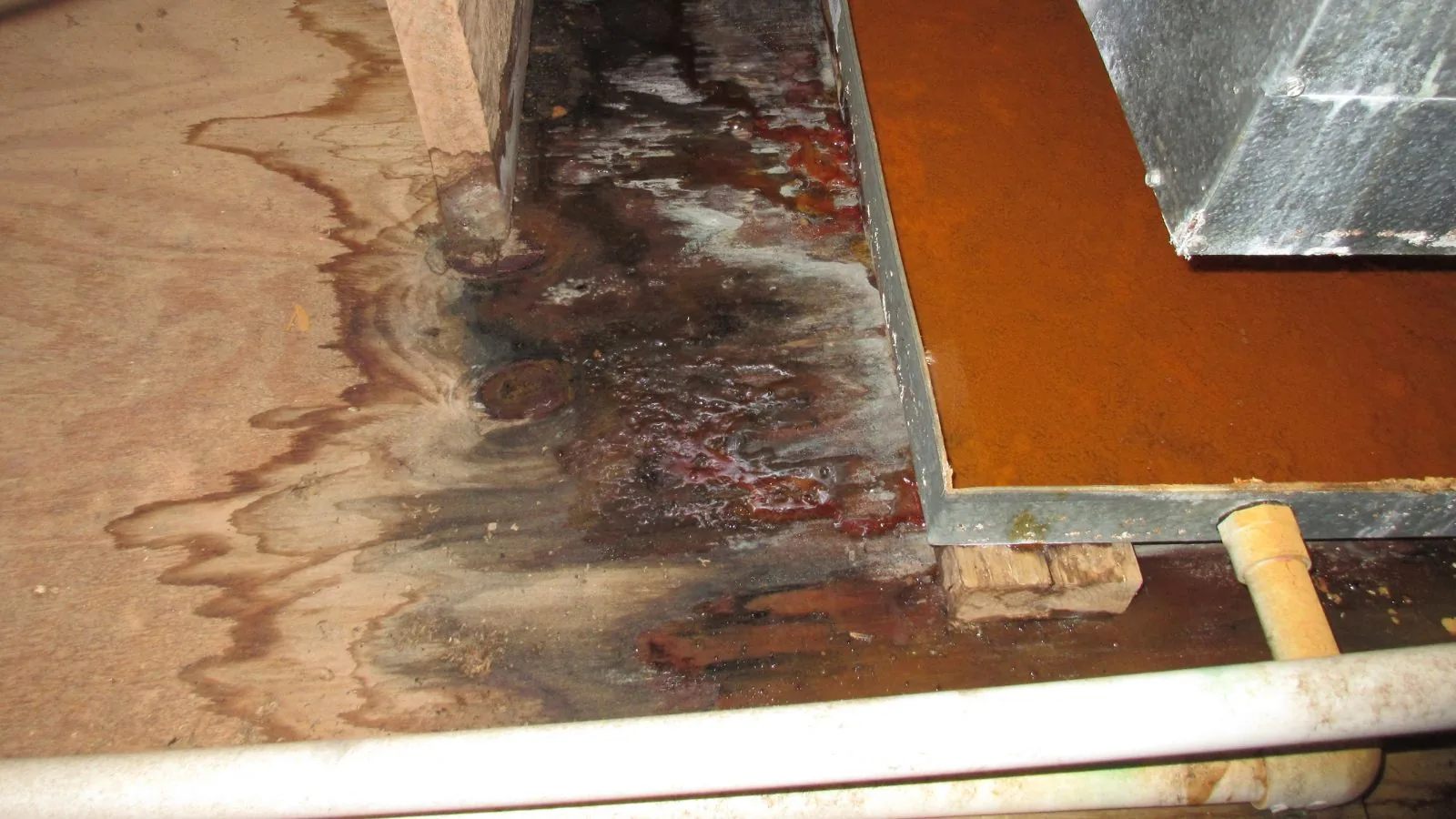
This guide lists the clues that separate recent water from old water and explains how a moisture meter settles it.
None of these signs is definitive on its own.
Signs of new or active water
- Damp or cool surfaces when touched.
- Stains that look darker or wetter in the middle with a fuzzy edge.
- Drips, standing water or a smell of fresh dampness.
- A growing stain over days.
Signs of old water damage
- Dry, brown or yellow stains with a hard edge, sometimes with several rings from repeated wetting.
- Paint that is cracked or peeling and dry to the touch.
- Warped or stained flooring with no current moisture.
- A faint musty smell with no visible water.
| Clue | New or active | Old or inactive |
|---|---|---|
| Surface feel | Damp or cool | Dry |
| Stain edges | Soft, spreading | Sharp, sometimes in rings |
| Stain over time | Grows or darkens | Stays the same |
| Meter reading | Elevated | Normal |
| Smell | Fresh dampness | Stale or none |
Why a moisture meter beats your eyes
A stain can sit on a ceiling for years after the leak stopped, and a leak can be active with only a faint mark. A moisture meter reads water in the material, and a thermal camera shows cooler, wetter zones. Together they tell you whether water is still present. The method is described on the wall and drywall water damage repair page.
An old stain with a normal reading is usually a cosmetic matter, but a stain with an elevated reading is an active problem. Rings from repeated wetting suggest a leak that comes and goes, such as from a roof or a seasonal condensate issue.
Seeing a stain and not sure if it is active? Call and ask for a moisture check.
What to do with what you find
- Mark the edge of the stain with a pencil and date it.
- Check it again in a few days, and after rain or after use of the fixtures above it.
- Find the source if it is active, and fix it.
- Dry the area, and ask about mold if it has been wet for a long time.
Roof and attic sources are covered under ceiling water damage repair, and a leaking air conditioner under AC leak water damage.
Hidden clues in other places
Look at the materials around the stain as well as the stain itself. Rusted nail heads or screws, white mineral crusts, a sagging section of board and swollen trim all suggest water was present for a while. Fresh, clean metal and tight joints suggest a more recent event.
In a basement, a faint line on the wall at a consistent height may mark where water stood in the past. Stored items that are warped or stained at a matching level support that reading.
Why it matters for selling or buying
A sale often turns on whether water damage was repaired and whether the cause was fixed. Old, dry stains with documentation of a repair are usually less worrying than fresh stains with no explanation. If you are selling, keep invoices and drying records. If you are buying, ask for them.
A moisture reading from a professional gives a defensible answer in either case, and it can be repeated later to show that conditions have not changed.
When to bring in a professional
If a stain is new, growing or damp to the touch, call for help promptly. If it is old and dry but you want proof, a moisture meter and a thermal camera can check whether anything is wet behind it. A single dry reading is a reasonable answer, and repeating it a few weeks later makes it stronger.
A professional can also tell you where the water likely came from, which is useful when you plan a repair. Fixing the stain without fixing the source only means painting over a leak.
If you are selling, a dated moisture reading and a repair invoice answer most buyer questions before they are asked. If you are buying, request the same records and compare them with what you see in the house.
For reference, professional water damage work follows the ANSI/IICRC S500 standard, and mold work follows S520. Ask any company you consider which standards it works to.
Syosset note: seasonal clues in a Nassau County house
A stain that shows up only after storms points to the roof or a window, while one that shows up in summer may point to an air conditioner. In winter, a stain near an exterior wall can come from a freeze. Keeping a simple log of when a stain changes helps a crew narrow the source.
If you are buying a house near the area, the buyer's checklist is part of the picture, and nearby pages such as Woodbury and Jericho describe the neighboring areas the same crew covers.
Questions homeowners ask
Can a stain be old and still active?
Yes. A leak that comes and goes leaves old-looking rings while still being active. A moisture reading is the way to know.
Does a dry stain mean the damage is repaired?
Not necessarily. The stain may be cosmetic, but the material underneath might have been damaged or may have mold. If it matters, have it checked.
How do I check a stain at home?
Touch it, mark its edge and watch it over several days and after rain. If it changes, there is moisture present.
Should I repaint old water stains?
Only after confirming the area is dry and the source is fixed. Use a stain-blocking primer.
Have water damage right now? The line is open 24/7.
Call (833) 521-1033