
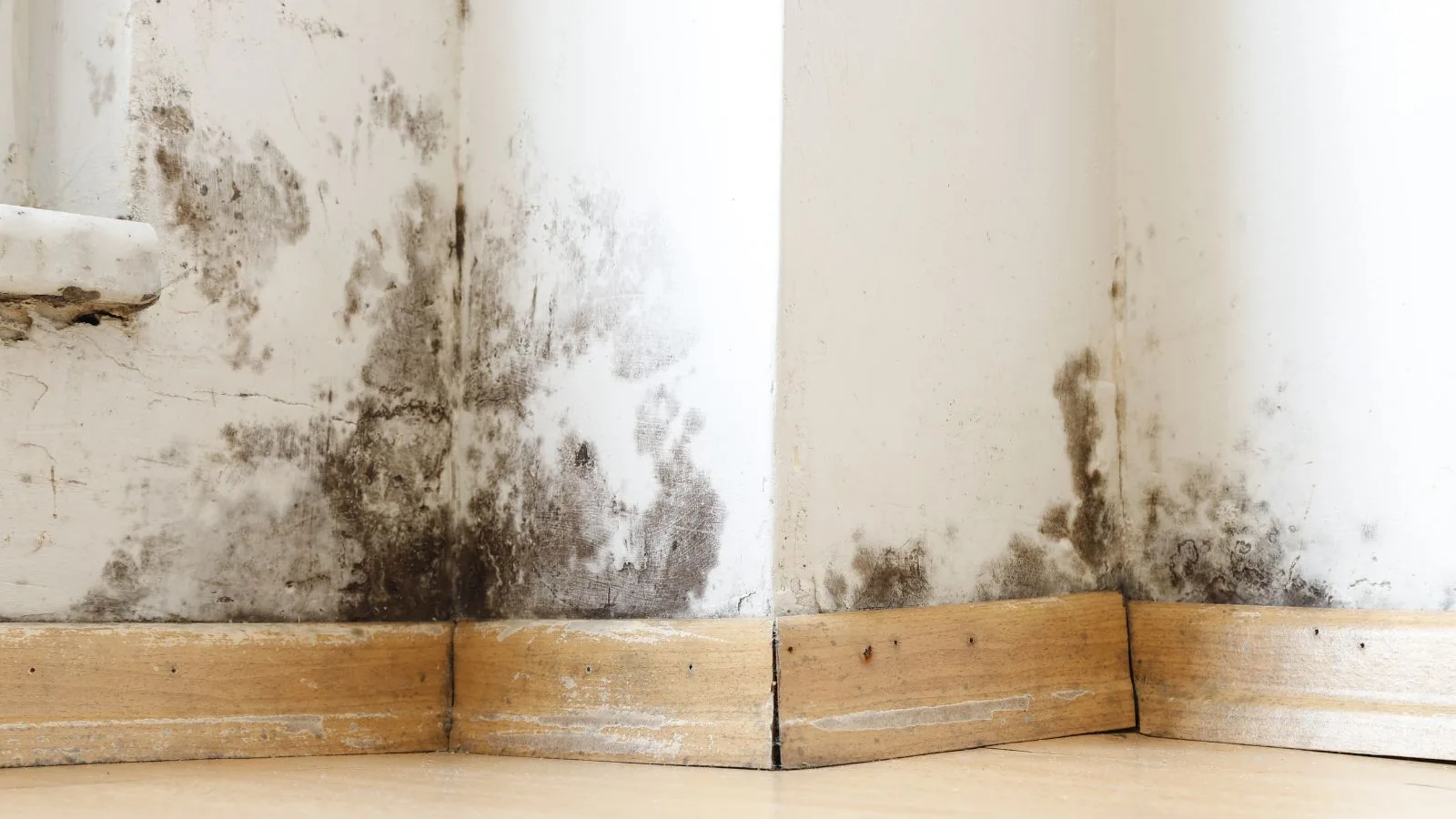
This guide covers small surface cases and tells you when to stop and call a professional. It does not give health advice, and questions about symptoms belong with a physician.
In New York, mold assessors and remediators are licensed by the state, so larger jobs follow different rules.
First, find and fix the moisture
Mold needs moisture. If you clean it without fixing the source, it returns. Check for a leak, condensation, a damp basement or a roof problem, and have the cause repaired before cleaning. If the area is still wet, drying comes first, which is covered under structural drying and dehumidification.
What you can reasonably clean yourself
- Small surface spots on sealed or finished wood, such as a trim board or furniture.
- Areas you can see fully, with no hidden growth behind or under the wood.
- Growth on a non-structural surface that dries completely once cleaned.
Wear gloves, eye protection and a respirator rated for fine particles, ventilate the room and keep the area closed off from the rest of the house. Do not dry-brush or sand mold, since that sends spores into the air.
A basic method for surface mold
- Lightly mist the area to keep dust down.
- Wipe with a damp cloth and a mild detergent solution, and bag the cloths.
- Rinse with a clean damp cloth.
- Dry the wood completely with air movement and a dehumidifier.
- Check again after a few days for returning growth or staining.
Bleach is not usually the right tool for porous wood. It can discolor the surface but does not reach growth inside the grain, and the water in it can add moisture.
| Situation | Typical choice | Reason |
|---|---|---|
| Surface spots on sealed trim | Clean and dry | Mold sits on the finish |
| Stains or growth deep in unfinished wood | Professional assessment | Growth is inside the grain |
| Framing, joists or subfloor | Professional assessment | Structural and often hidden |
| Soft or crumbling wood | Replace the section | Rot or decay is present |
When to stop and call
Stop if the growth is large, if the wood is soft, if the area keeps coming back or if you find it in framing or behind walls. New York licenses mold assessors and remediators, so for larger jobs the mold remediation page explains what comes first.
Not sure how far the mold goes? Call and ask for a moisture check before you scrub.
Why wood is harder than tile or glass
Wood is porous. Mold on a smooth surface like tile or glass sits on top, and a wipe can remove it. In wood, growth can send threads into the grain, and a surface wipe leaves part of it behind. Finished wood, with a sealed coating, behaves more like a smooth surface, while raw or weathered wood behaves like a sponge.
That is also why discoloration after cleaning does not always mean mold is still there. Dark staining can remain in the wood even when the growth is gone, and an assessor can tell the difference.
Preventing a repeat
- Fix the leak or condensation that started it.
- Keep indoor humidity under control, and use a dehumidifier in damp lower levels.
- Improve airflow around wood in closets, basements and crawl spaces.
- Check the area after rain and in humid weather for new staining or a musty smell.
- Do not store cardboard or fabric directly against damp wood.
If a spot returns within weeks after cleaning, the moisture source is still active or the growth was deeper than it looked. Stop cleaning and have it assessed.
Protective steps before any cleaning
Wear gloves, eye protection and a well-fitted mask rated for fine particles. Keep the area ventilated to the outside if you can, and keep children and pets away. Avoid dry brushing or sanding, since that throws particles into the air.
Use a damp cloth with a mild detergent and bag the cloth afterward. Do not mix bleach with ammonia or other cleaners, because the fumes are dangerous. If the work makes you cough or your eyes sting, stop and leave the room.
Cleaning a small, dry, sealed surface is one thing. Opening a wall or cutting into framing is another, and that is where an assessor and a licensed contractor come in.
For reference, professional water damage work follows the ANSI/IICRC S500 standard, and mold work follows S520. Ask any company you consider which standards it works to.
Syosset note: basements, bathrooms and crawl spaces
Mold on wood in the Syosset area most often follows a plumbing leak, condensation or a damp lower level. If your house has a basement, check wood near the foundation and around the water heater, and if it has a crawl space, check the joists above it. The crawl space water damage page explains how moisture builds there.
The Jericho Water District supplies nearly all of Syosset, so a high water bill that cannot be explained is worth checking against a hidden leak that could be feeding mold.
Questions homeowners ask
Can I use vinegar or bleach on mold on wood?
Neither reaches growth inside porous wood. A mild detergent and thorough drying are the usual approach for small surface spots. Do not mix cleaning products.
Is mold on wood always dangerous?
This guide cannot give health advice. Questions about health belong with a physician, and a professional can tell you how far the growth extends.
Should I paint over mold on wood?
No. Painting hides the problem and traps moisture. Clean, dry and confirm the source is fixed first.
My Syosset basement beams look moldy. What now?
Beams are structural, and growth on them is a job for a professional assessment. Do not sand them. Call and describe what you see.
Have water damage right now? The line is open 24/7.
Call (833) 521-1033